
How to Get Plumbing Leads: A Guide to Quality Calls
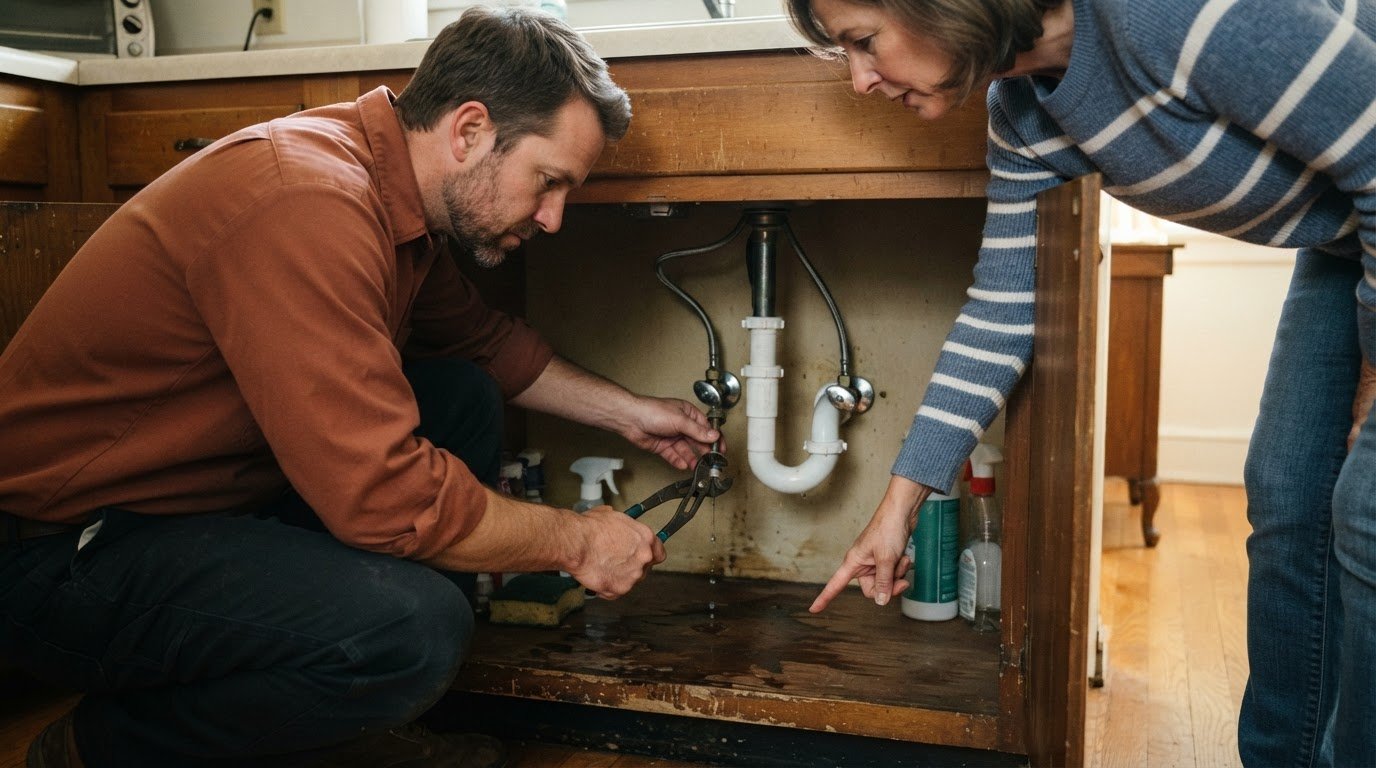
A busy phone doesn’t prove your plumbing leads are profitable. Measure return by tracing each lead from source to contact, booked appointment, completed job, and revenue, then compare acquisition costs with the gross profit generated. To get plumbing leads that support growth, focus on the sources that produce completed, profitable work, not simply the highest call count.
Lead volume can look like the fastest fix when your schedule has openings. But a lead’s value depends on whether your team reaches the caller, books the work, and closes the job. Assess lead ROI by tracking each stage, then choose sources that fit your services and capacity. Koalaty Leads provides exclusive web leads and live inbound call transfers for home-service contractors, including Plumbing. These pay-per-lead options can complement referrals and customer outreach. The sections below explain what to measure and how to evaluate a lead source.
Key Takeaways
- Track each lead from source to booked job, then compare acquisition cost with the job’s revenue and profit.
- Build referral momentum through consistent customer follow-up, review requests, and relationships with businesses that serve the same local market.
- Combine plumbing-specific lead channels so referrals, repeat customers, local search, and paid campaigns support a steadier pipeline.
- Use your Google Business Profile and local service pages to make it easier for nearby customers to find and contact your business.
- Assess paid campaigns by the calls and jobs they produce, and consider exclusive leads or live transfers when you need another source of opportunities.
How to Measure ROI on Plumbing Leads
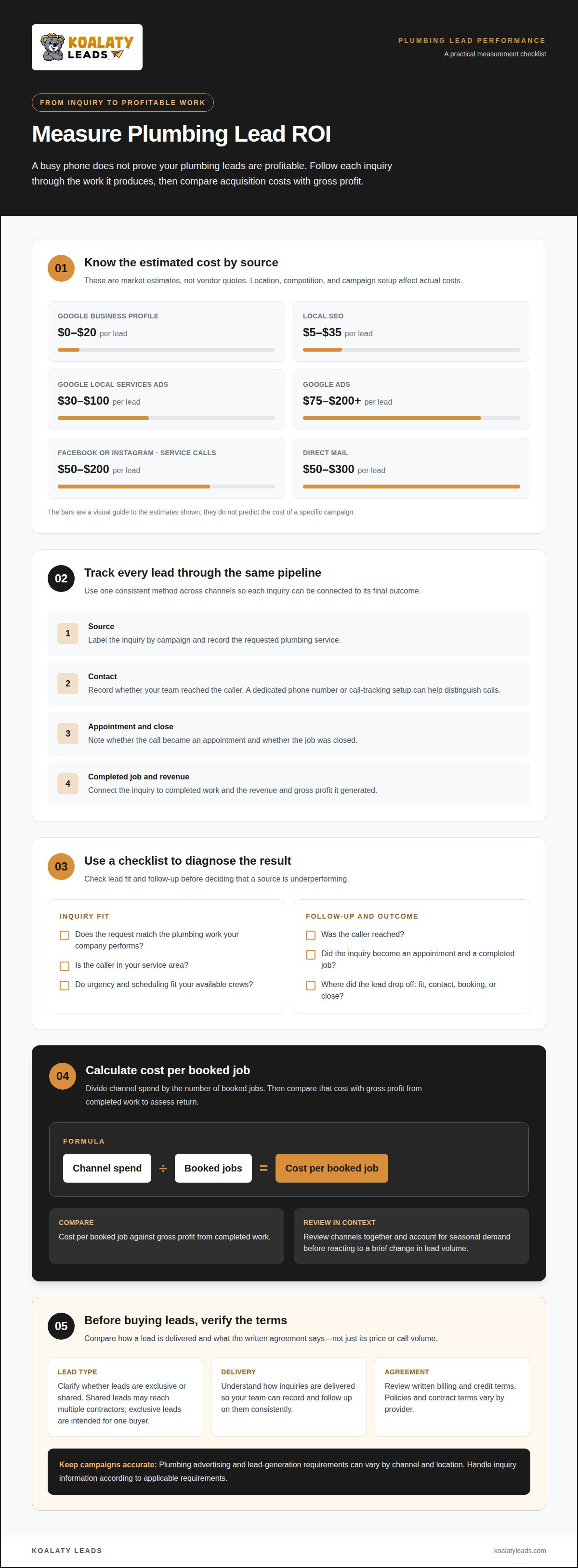
Measure return by tracing each inquiry from source to completed job and gross profit. To assess plumbing lead generation, track contact, booking, close, and revenue rather than judging campaigns by call volume alone.
Channel costs vary, and the ranges below are market estimates, not vendor quotes. Location, competition, and campaign setup affect actual costs.
| Lead source | Estimated cost per lead |
|---|---|
| Google Business Profile | $0-$20 |
| Local SEO | $5-$35 |
| Google Local Services Ads | $30-$100 |
| Google Ads | $75-$200 or more |
| Facebook or Instagram, service calls | $50-$200 |
| Direct mail | $50-$300 |
Use one tracking method across sources. Label inquiries by campaign, record the requested service, and connect each record to its final outcome. A dedicated phone number or call-tracking setup can help distinguish calls that would otherwise appear under one general business line.
U.S. plumbing advertising and lead-generation requirements can vary by channel and location. Keep campaign claims accurate and handle inquiry information according to applicable requirements.
Qualify each inquiry against the work you perform, the caller’s location, urgency, and scheduling fit. Record whether the call became an appointment and a completed job. This helps show whether weak results stem from poor-fit inquiries or a drop-off during follow-up.
Before buying leads, clarify whether they’re exclusive or shared, how they’re delivered, and what the written agreement says about billing and credits. Shared leads may reach multiple contractors; exclusive leads are intended for one buyer. Policies and contract terms vary by provider.
To attract local inquiries, keep your Google Business Profile and service pages accurate for the areas and plumbing work you handle. Include a clear phone number and distinct service descriptions, then track which pages and areas produce calls.
Calculate cost per booked job by dividing channel spend by the number of booked jobs. Compare that figure with the gross profit from completed work to assess return. Review channels together and account for seasonal demand before shifting budget in response to a brief change in lead volume.
Referrals and Word of Mouth for Plumbing Contractors
Turn referrals into a repeatable channel by giving customers and partners a clear description of the plumbing work your company accepts. A short introduction can name your core services, the jobs you want, and how prospective customers can reach your office. That makes it easier for someone to recommend your business accurately.
Build partner relationships around useful, dependable handoffs. Real estate agents, property managers, and home inspectors may encounter plumbing needs during transactions or property upkeep. Explain how your team handles common requests, identify the right contact for introductions, and follow up promptly when a prospective customer has agreed to be contacted.
Set expectations with partners before referrals begin. Clarify which services and service areas fit your operation, how to share an inquiry with the customer’s permission, and who will respond. For example, a property manager may need a contact for recurring maintenance, while an agent may introduce a client with a specific repair request.
Reviews can reinforce a referral by helping prospects understand what working with your plumbing company involves. Invite customers to describe their experience in their own words, and respond with a brief, professional acknowledgment. Don’t disclose private job details in a public reply, even when a review includes specifics.
Make customer advocacy part of your process without making every interaction feel like a sales pitch. A helpful follow-up can thank the customer, provide your office’s contact details, and invite them to pass those details along if someone they know needs plumbing work. Keep the message relevant to the completed service.
Measure referrals separately from other lead sources. Record whether an inquiry came from a customer, a business partner, or an online review, then note the requested service and outcome. This shows which relationships produce the best-fit opportunities and where a clearer explanation of your services could improve referrals.
Use the findings to strengthen your referral materials. If introductions regularly bring requests outside your scope, revise the service description partners share. If a certain job type is a strong fit, make that easier to recognize in your customer and partner communications.
Referrals can complement other plumbing lead sources rather than carry the entire pipeline. If you’re considering additional contractor lead options alongside relationship-driven inquiries, the home service lead services page gives relevant context for that next step.
What Are the Best Ways to Get Plumbing Leads?
Plumbing businesses can build a stronger pipeline by combining customer reactivation, paid inquiries, and dispatched work. Choose channels around the jobs you need, such as urgent service calls or planned installations, then match incoming leads to available crews.
Start with past customers. Send seasonal email reminders, check-ins, or maintenance messages that bring your plumbing company to mind when needs arise. A message before winter, for example, can prompt customers to schedule relevant service before cold-weather demand builds. Keep each note specific, useful, and easy to answer.
For faster activity, paid search may support open schedule capacity. Google Ads campaigns may be able to go live within one to three days of setup, while pay-per-call advertising may produce initial leads in one to seven days. Actual timing depends on campaign setup, market conditions, and demand, so treat these as possibilities, not promises.
Home warranty companies and insurers can provide another source of dispatched work. Registering as an approved contractor may connect your team with covered service requests. Review the job types, paperwork, and scheduling demands before relying on this source. These assignments may fill gaps but can carry thinner margins.
Organic lead generation may take time to build. Plumbing marketing strategies such as useful service pages, local search visibility, and customer follow-up can contribute to results, but timing varies. Build that foundation while using other channels, rather than expecting organic activity to fill next week’s schedule.
Response speed matters after an inquiry arrives. Contact new plumbing leads promptly, while the customer’s need is still current. If the first call goes unanswered, follow up with a clear message and a simple route back to your business.
Match each source to a distinct business need. Use paid search when crews have immediate capacity, past-customer outreach for seasonal reminders, and approved warranty work to address schedule gaps. Track inquiry type and outcome by source, so emergency calls don’t get mixed with installation opportunities.
Then adjust the mix as demand changes. If a seasonal campaign brings inquiries your team can’t schedule, reduce its emphasis and prioritize sources aligned with available crews. A steady plumbing lead generation system isn’t one channel; it’s a coordinated set of sources that fits your services, local demand, and capacity.
How Plumbers Can Generate Leads Through Local SEO and Google Business Profile
Start with a complete Google Business Profile that accurately represents your plumbing company. Enter the business name, phone number, website, hours, address, and plumbing categories. Keep each detail consistent with your website so customers can identify the right business and contact you without confusion.
Choose profile categories and service details that match the work you actually perform. If your team handles drain cleaning, leak repairs, and water heater installations, describe those services clearly rather than relying on a broad “plumber” label alone. Add real photos of your team, branded vehicles, and completed job sites to make the profile more useful.
Build local SEO pages around the cities and plumbing services your crews cover. A page for drain cleaning in a city you serve should explain the service, name the city naturally, and give visitors a clear way to call. Create separate pages for distinct services only when each page offers useful, original information.
Make the next step obvious on every page. Put your business phone number where mobile visitors can tap it, and identify your service area near the top. A visitor looking for a plumber in a specific city shouldn’t have to scan several pages to learn whether your company handles that location.
Keep your Google Business Profile active with accurate updates, useful photos, and timely responses to customer reviews. If your hours change for a holiday or your team adds a service, update the profile and relevant website pages together. Consistent details help prevent mismatched information across Google results and your own site.
Use the language customers use to describe plumbing needs. Write clear service descriptions for searches such as “emergency pipe repair” or “water heater replacement,” but avoid repeating city names unnaturally. Each page should answer practical questions about the service, coverage, and how to reach your office.
Organic visibility takes consistent work rather than a quick profile edit. A new plumber website may take 3 to 6 months to produce its first organic leads from city pages. During that period, publish useful local service information, maintain accurate profile details, and keep the phone number easy to find.
Review profile and website performance together. Compare which service pages and city pages generate calls, then improve pages that attract visits but don’t prompt contact. If a page about sewer line work draws the wrong inquiries, clarify the service description and coverage instead of simply adding more keywords.
How Plumbers Can Get Plumbing Leads From Social Media and Paid Ads
Use paid ads to capture active plumbing searches, and social media to build recognition and reconnect with interested prospects. Give each campaign one service focus, such as drain cleaning, water heater replacement, or leak repair, so you can assess whether inquiries match the work your team wants.
For Google Ads, target high-intent plumbing searches and send each click to a job-focused landing page. A sewer line repair page should explain the service, identify the areas covered, and make your business phone number easy to find. Track calls, qualified leads, booked jobs, and acquisition cost, not clicks alone.
Campaign setup and launch timing can vary, so don’t assume Google Ads campaigns will go live within one to three days. After launch, review search terms and incoming calls to identify irrelevant traffic. Tighten targeting when ads attract inquiries for services your company doesn’t perform, and compare the cost of qualified leads with the jobs they produce.
Do not treat claims that Google began moving U.S. plumbing Local Services Ads into Google Ads in August 2026, or that performance takes two weeks to settle after a move, as established guidance without verifying them against current Google documentation. If your account changes, track lead source, service requested, and outcome so you can assess whether the change affects lead quality or acquisition cost.
Social media serves a different role. Share job photos, repair videos, and concise answers to common plumbing questions. A post explaining what a technician checks during a drain inspection can demonstrate expertise and help local prospects remember your company.
Use paid social campaigns to promote a specific service or seasonal offer, directing responses to a focused landing page or call option. Keep the service, location, and next step consistent across the ad and destination. Track whether inquiries are qualified and turn into booked jobs, rather than treating engagement as a lead.
Retargeting can reconnect with people who visited your plumbing pages but didn’t contact you. Pair it with search and organic activity, then assess whether returning visitors call, qualify, or book. Track lead source, requested service, and outcome to compare acquisition costs across campaigns.
Before increasing spend, compare campaign results with appointment capacity and job profitability. Pause ads that produce poor-fit calls, refine the service message, and focus on campaigns generating relevant inquiries and profitable jobs. Manage paid promotion according to the plumbing work it brings in, not clicks alone.
Talk with Koalaty Leads about exclusive leads or live transfers for your trade and market
Talk to Koalaty Leads About Plumbing Leads
Koalaty Leads is a natural next conversation when your plumbing business is assessing how to bring more qualified calls into its pipeline. A discussion can focus on your trade, market, target job types, and how new lead sources might fit alongside referrals, local search, and paid campaigns.
Start with the work you want more of. Emergency service calls, drain cleaning, and planned installations can involve different customer intent and scheduling needs. Clarifying your priorities helps match lead opportunities to the plumbing work your team is equipped to handle.
Bring a clear picture of your market. The areas you cover, the jobs you accept, and your current crew capacity all shape what a useful lead flow means for your company. For example, a team seeking more installation work may have different goals from one filling open service-call slots.
It also helps to describe how your current lead process works. Explain which sources generate calls, how your team follows up, and where inquiries tend to stall. Those details can frame a practical discussion about whether exclusive web leads or live inbound call transfers fit your marketing mix.
Koalaty Leads works with contractors across home improvement trades, including Roofing, HVAC, Kitchen Remodeling, and Windows. Its listed home-service verticals also include Plumbing. For a plumbing contractor, start with a direct discussion about the trade, service area, and the lead format that fits the team’s process.
Keep the evaluation grounded in your operating goals. Decide what makes an inquiry relevant, how your office records its source, and which outcomes matter most, such as scheduled appointments or completed jobs. That gives you a consistent basis for evaluating a lead channel alongside your existing efforts.
There’s no need to approach the discussion with a fixed plan. Share the type of plumbing work you want to grow, the areas your business serves, and how you currently generate calls. Koalaty Leads can discuss its contractor lead options in the context of those goals and your market.
Talk with Koalaty Leads about your plumbing trade and market.
Make Your Next Lead-Generation Move
Choose your next step based on the kind of plumbing work your business wants to grow and the calls your team can handle. A deliberate plan to get plumbing leads should connect each source to a clear business goal, then leave room to refine your approach as you learn which inquiries fit.
Koalaty Leads offers roofing leads, window replacement leads, and bathroom remodel leads for contractors in those trades. For plumbing businesses, start a conversation about your trade and market, and discuss whether exclusive leads or live transfers fit your approach. Keep the focus on the work you want, your service area, and how your team handles incoming opportunities.
Build with purpose, measure what matters, and keep moving toward a stronger pipeline.
Frequently Asked Questions
How do I measure ROI on my plumbing leads?
Compare gross profit from completed jobs with the total cost of generating and handling their leads. Track each inquiry from source through contact, appointment, sale, and completed work to see where revenue comes from. For example, separate urgent repair calls from installation inquiries, since their job values and close paths can differ. Use the same attribution method across channels to make comparisons meaningful.
Do I need to sign long term contracts for plumbing lead generation?
No single contract term applies to every plumbing lead-generation arrangement. Before agreeing, read the written terms for duration, renewal, cancellation, lead definition, and any minimum commitment. Make sure the agreement explains what happens when a lead falls outside your service criteria. A short test period may help assess fit, but its availability depends on the provider’s actual terms.
Are there monthly service fees or long-term contracts?
Fee structures and contract terms depend on the lead provider and service. Koalaty Leads describes its model for its lead offerings as pay-per-lead, but that fact alone doesn’t establish whether another provider charges a monthly fee or requires a long-term agreement. Review the billing terms for any separate charges, renewal conditions, and cancellation requirements before committing.
How do established plumbing businesses scale lead generation?
Established plumbing companies scale by matching lead intake to sales coverage and crew capacity. Expand deliberately: identify which job types and sources contribute profitable work, then increase attention to the ones the operation can serve. Make sure someone owns follow-up, lead assignment, and outcome tracking. If response handling becomes inconsistent as volume grows, improve that workflow before adding more demand.
How much do plumbing leads cost from lead-generation services?
Estimates such as $30 to $200 or more are sometimes cited for plumbing leads, but without a documented source and a defined lead type, channel, and market, they are not a reliable pricing benchmark. Ask providers for current pricing and compare it with your cost per acquired job. Account for how many inquiries become booked, completed, profitable work before judging a lead’s value.
Which plumbing lead-generation platforms are best for contractors?
There isn’t one best lead format for every plumbing contractor. Choose based on service area, job types, and how your team handles incoming inquiries. Koalaty Leads offers exclusive web leads and live inbound call transfers, both on a pay-per-lead basis. Compare outcomes using consistent records of sales and completed jobs.
How can plumbers generate referrals and repeat-customer leads?
Use a repeatable follow-up process after each completed job. Send a thank-you message, invite the customer to share your company’s details with neighbors, and schedule relevant seasonal reminders for past customers. Referral partners such as property managers and real estate agents can also introduce prospective clients. Record whether each inquiry came from a past customer, personal recommendation, or partner to identify which relationships bring suitable work.
Need exclusive leads instead of shared ones? Koalaty Leads delivers qualified homeowners — web leads or live call transfers — to one contractor only.
Get Started