
How to Get Painting Leads: Proven Strategies for Growth

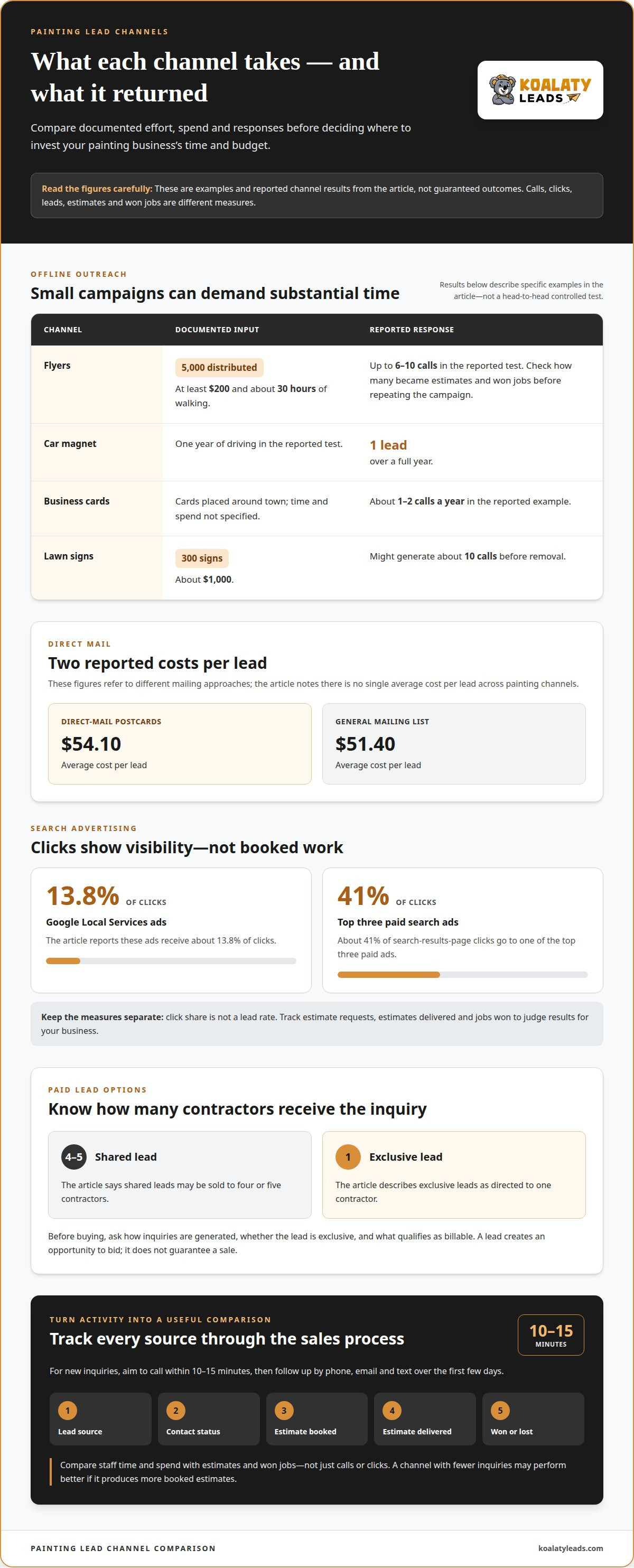
Flyers can bring painting calls, but a car magnet may take far longer to produce a lead. In one publisher’s test, distributing 5,000 flyers cost at least $200 and about 30 hours of walking, and generated at most 6–10 calls; a car magnet produced one lead in a full year. For contractors working out how to get painting leads, the lesson is to judge each channel by the time and effort it takes to turn attention into estimates and jobs.
Traditional outreach still has a place. It works best when you target the right audience, follow up promptly, and track which sources lead to booked work. Referrals and relationships with property managers or real estate agents can build a steadier pipeline, while paid leads offer another way to connect with people seeking painting services.
This guide explains how to weigh flyers against other marketing tactics, encourage referrals, build trade relationships, and measure lead quality. Use the practical framework to decide where to invest your time and how to turn more inquiries into booked estimates, without relying on a single channel to carry your business.
Key Takeaways
- Compare flyers, car magnets, business cards, and lawn signs by the time and effort they take, then track which ones generate real estimate requests.
- Build organic inquiries through visible local activity and consistent follow-up, but assess each source by whether it leads to booked work.
- Turn completed jobs into referral opportunities with reliable service, fair pricing, and prompt attention to problems.
- Develop reciprocal relationships with real estate agents, property managers, and complementary trades by making it easy to refer work to you.
- Measure lead sources against estimates and won jobs so you can focus your time and budget on channels that contribute to revenue.
1. How Do You Get Free Painting Leads?
Start with channels that don’t charge per lead: a complete Google Business Profile, useful local posts, and satisfied customers who are willing to refer you. These sources take consistent effort, but they can help you build a painting lead pipeline without paying for every inquiry. Strong lead generation combines local visibility, referral relationships, and prompt follow-up.
Make your Google listing easy to act on. Add accurate service details, current photos of completed projects, and a clear way to request an estimate. Ask customers to leave honest reviews after jobs finish; a listing with more 5-star reviews than competitors may attract more calls. Keep the profile current, and answer inquiries with a specific next step, such as arranging an estimate.
Licensing, insurance, and advertising requirements depend on where your painting business operates and how it solicits prospects. Identify the applicable state and local rules, then make sure your listings, outreach, and lead forms comply before launching a campaign.
Work backward from revenue goals instead of guessing at volume. One example estimates that an extra $10,000 in annual revenue may require about $100,000 in additional painting sales and roughly 100 more estimates. Depending on conversion, that could require 150–300 additional leads, or 3–6 leads per week. Treat this as a planning example, then replace it with my business’s actual average job value, estimate rate, and close rate.
Compare organic lead generation with an agency by examining the source and sales process, not just the promised volume. Organic inquiries can take time and staff effort. A purchased painting lead creates an opportunity to bid, not a guaranteed sale; shared leads may be sold to four or five contractors, while exclusive leads are directed to one contractor. Ask how inquiries are generated, whether the lead is exclusive, and what qualifies as a billable lead. Weigh the answers against your estimate capacity and expected cost per acquired job.
Track every painting lead from first contact through the final result. Record its source, contact status, estimate booked, estimate delivered, and sale won or lost. Then compare closing rates and revenue by source; a channel with fewer inquiries may perform better if it produces more booked estimates. For new inquiries, aim to call within 10–15 minutes, then follow up by phone, email, and text over the first few days. A consistent process helps turn lead generation into measurable sales activity.
2. Do flyers and car magnets work when deciding how to get painting leads?
Flyers can bring calls, but distribution takes time and responses vary. One test distributing 5,000 flyers cost at least $200, took about 30 hours, and produced at most 6–10 calls. Before repeating a campaign, compare its cash cost and labor with the estimates and jobs it generates.
Vehicle and print tactics need separate tracking. A car magnet produced one lead over a full year of driving in the same test. Placing business cards around town generated about 1–2 calls a year, while 300 lawn signs cost about $1,000 and might generate 10 calls before removal. Give each campaign a distinct phone number or QR code to identify its inquiries.
There isn’t one average cost per lead across painting marketing channels. Direct-mail postcards average $54.10 per lead, while direct mail to a general mailing list averages $51.40. Those figures describe different mailing approaches, not a universal rate. Compare the expense with the estimates booked and jobs won from each source.
A custom website can support organic local search and help prospects act. Build clear pages for the painting services and areas your crews cover. Add completed-project examples, accurate contact details, and a short estimate-request form. Contractors deciding how to get painting leads can track which pages produce inquiries, then refine content around the work they want to book.
Facebook and Instagram can showcase project photos and direct prospects to a call or estimate form. Google Ads can target people searching for painting services. Google Local Services ads receive about 13.8% of clicks, while about 41% of search-results-page clicks go to one of the top three paid ads. Track estimates and completed jobs, not clicks alone.
Paid lead services provide another source of inquiries. Compare how leads are generated, whether they’re exclusive, and what the billing rules cover. Shared leads may be sold to four or five contractors, while exclusive leads are directed to one. Consider whether your team has capacity to contact prospects and prepare estimates promptly.
Free sources still take consistent work. Keep your business profile accurate, share useful project updates, and make it easy for past customers to refer prospects. For estimates, use one worksheet to record project scope, labor assumptions, and estimate status. This gives you a consistent way to compare inquiries from different sources.
Measure each channel from first inquiry to booked work. Flyers may bring calls, while search ads may reach people actively looking for a painter. Include staff time, advertising spend, estimates, and won jobs in your review. This gives your painting business a practical basis for deciding where to invest next and how to get painting leads with less guesswork.
3. Customer service and referrals
Referrals grow from the experience you deliver, not from a last-minute request alone. A 2019 Home Improvement Research Institute survey found that 88% of contractors get job leads through word of mouth. For a painting company, that makes clear communication, dependable scheduling, and a clean handoff practical parts of lead generation. Each completed project should leave customers confident describing your work to neighbors.
Build a repeatable closeout process. Before leaving, review the finished scope with the customer, address any concern, and explain how to reach your team if something needs attention. Painter Benoit Gagné said clients remember the last 15 minutes of a painting job. Treat those minutes as the final customer-service touchpoint, not simply the end of production.
Ask for referrals at a natural moment, such as after the customer approves the completed work. Keep the request direct: “If a neighbor needs painting, would you feel comfortable sharing my business name?” A short script helps employees ask confidently without making the conversation feel forced. Track which referrals lead to estimates and which estimates turn into jobs.
Returning customers and referred prospects can behave differently from cold inquiries. Tony Severino said a painting business should aim for a 99% closing rate with returning customers and around 33% with customer referrals. Use those figures as benchmarks from his experience, not as a forecast for every company. Compare your own close rates by source before paying more to reach new prospects.
Choose a service area based on crew capacity, travel time, and the work you want to book. Map the neighborhoods your team can serve consistently, then target marketing there rather than accepting inquiries across a scattered territory. For example, an owner whose crews are already scheduled nearby may prioritize adjacent neighborhoods, where estimates and follow-up fit existing routes.
Google Local Services Ads can connect your painting business with people searching locally. Set the service area to match your operating footprint, keep business details accurate, and respond promptly to inquiries. Record each lead’s source and outcome in your tracking system. Paying for placement makes sense only when the resulting estimates and closed jobs support the spend. Treat these ads as one channel alongside referrals and repeat work.
Build a referral network with past customers and trusted local contacts. Give each person a concise description of the projects you want, the areas you serve, and the best way to reach your estimator. When a referred prospect calls, record the source and follow the same intake steps you use for every painting lead. This helps reveal which relationships produce qualified opportunities.
4. Building referral relationships with realtors and other trades
Real estate agents and complementary trades can introduce your painting business to prospects at useful decision points. Agents may need dependable painting estimates before a listing goes live or after a sale closes. Flooring installers, drywall contractors, and remodelers may meet customers who need painting after their work is finished. Focus on partners whose projects and service areas fit yours.
Start with a clear introduction, not a broad request for referrals. Explain which painting jobs you take, where your crews work, and how quickly you can provide an estimate. For example, tell a realtor you handle interior refreshes between listing preparation and photography. A specific use case makes it easier for an agent to recognize a suitable prospect.
Make referrals easy to pass along. Give each partner a concise description of your services, a direct phone number, and a short email they can forward. Agree on how to introduce a prospect, then respond professionally and keep the referrer informed. This builds trust without asking partners to chase updates or manage your sales process.
Protect relationships with reliable work and careful cleanup. Before wrapping up, walk through completed painting jobs, note any touch-ups, and resolve concerns promptly. A clean work area and clear completion update give customers a reason to recommend you to friends, neighbors, or their real estate agent. Addressing mistakes directly can preserve confidence when a job needs correction.
Build a reciprocal network with trades that serve the same customers, but don’t promise referrals you can’t deliver. Share suitable opportunities when they arise, and keep a simple record of introductions, estimates, and outcomes. If a flooring contractor refers a customer after installation, for instance, thank them and confirm the prospect received a response. Consistent follow-through turns occasional introductions into a dependable business practice.
Stay visible without turning every interaction into advertising. Check in with realtor contacts when your schedule or service focus changes, and share useful updates they can pass on to clients. A short message describing your service area and estimate process is more actionable than a generic “send us work” pitch. Keep communication relevant and follow up on each referred inquiry.
Measure partner relationships by completed estimates and won work, not introductions alone. Record the partner, project type, estimate status, and outcome in your lead tracker. This shows which relationships produce suitable painting prospects and where communication breaks down. Spend more time maintaining productive connections, and refine your approach with partners whose referrals don’t match your crew’s capacity.
5. Networking with property managers and real estate agents
Property managers and real estate agents can connect painting contractors with recurring project opportunities. Managers coordinate turnovers and property upkeep, while agents often work around listing preparation and closing dates. Start by identifying contacts whose residential properties fit your crew’s capacity and service area.
Build a focused contact list from local property management firms, brokerages, and real estate offices. For each contact, note the property types they manage, the neighborhoods they serve, and how they prefer to receive contractor introductions. This preparation gives your first email a relevant purpose rather than making it a generic advertising pitch.
Keep outreach short and practical. Introduce your painting business, name the work you handle, and explain how a manager can request an estimate. For example: “We handle interior repainting for rental turnovers in your service area. Reply with the property address and scope, and we’ll arrange the next step.” Don’t promise response times your team can’t meet.
For property managers, emphasize dependable coordination across occupied and vacant units. Ask how they share project details, approve estimates, and schedule access. Record those preferences in your customer relationship system, then use the same intake steps for each new painting opportunity. Clear communication prevents avoidable back-and-forth for both businesses.
Real estate agents need a different message. Tie your introduction to listing preparation, showing schedules, or post-sale work. Provide a concise project checklist they can forward, covering the information your estimator needs, such as rooms, surface condition, and timing. This makes it easier for an agent to introduce you without managing the painting project.
Follow up with useful, relevant emails rather than repeated requests for work. Share a brief service update, a completed-project example, or a reminder of your estimate process. Personalize each message to the recipient’s role and make it easy to reply with a referral. Track replies, introductions, estimates, and won jobs by contact.
Reputation management supports these relationships. Keep your business profile accurate, respond professionally to customer feedback, and ask satisfied customers for honest reviews. When a property manager or agent searches for your business, current project examples and consistent contact details help them assess your professionalism before making an introduction.
One reported networking example generated over $200,000 in painting work within three months. Treat that as an example, not a forecast; results depend on relationships, project fit, follow-through, and the ability to complete work. Track each partner’s referrals and closed jobs to see which connections deserve more attention.
Use these records to shape future outreach, prioritizing partners whose projects fit your crew’s schedule and painting services.
Koalaty Leads: Roofing Leads
Koalaty Leads provides roofing leads for contractors looking to add opportunities beyond referrals and local networking. If your company also handles roofing, exclusive leads and live call transfers can complement the relationships built through painting work. Track those inquiries separately from painting prospects, then compare contact, estimate, and close outcomes to understand how each trade contributes to your pipeline.
Keep your lead strategy aligned with the work your crews can take on. A roofing inquiry serves a roofing operation, while painting referrals and partner relationships remain important channels for painting jobs.
Visit Koalaty Leads to learn more about lead options for your contracting business.
Build your next pipeline with intention
A practical plan for how to get painting leads should fit your crew, the projects you want, and the time available for follow-up. Set a regular review point to decide which relationships to nurture, which outreach to continue, and where your next estimates can come from. Keep the process workable, then refine it as your schedule and priorities change.
If your contracting business also serves other home improvement trades, Koalaty Leads offers Roofing Leads, Window Replacement Leads, and Bathroom Remodel Leads. These opportunities may complement your painting work when your company is equipped to serve those trades. Discuss the lead type and market that fit your business before adding another source to your pipeline.
Keep building with focus. A clear process gives your team a stronger foundation for the next opportunity.
Frequently Asked Questions
Do flyers and car magnets work for painting companies?
Flyers and signs can support local visibility, but results depend on placement, message, and tracking. Give each flyer or sign a distinct phone number, QR code, or short landing page so you can identify the source of inquiries. A car magnet is harder to track because prospects may see it long before contacting you. Compare channels by estimate requests and booked work, not impressions alone.
How Do You Get Free Painting Leads?
Build organic opportunities through your Google Business Profile, useful project updates, and customer referrals. For example, post a completed-job photo with a short description of the work and the service area you cover. Keep business details consistent across profiles, and make it easy to request an estimate. These channels don’t charge per inquiry, but they take time to maintain and respond to prospects.
How quickly should you call a new lead?
Call within 10–15 minutes when possible, while the inquiry is still fresh. If the prospect doesn’t answer, leave a concise voicemail that identifies your painting company and offers a clear next step. Log the attempt, then follow up through the contact method the prospect provided. A simple intake record prevents missed callbacks when estimators are on jobs or crews are in the field.
How can painters get more leads from Google Business Profile and local SEO?
Keep your Google Business Profile accurate and focused on the painting services you provide. Add current project photos, answer profile questions, and use consistent business details on your website and other listings. Create website pages that match your service areas and project types, then review which pages generate estimate requests. This helps you refine local visibility around work your crews can take on.
Which websites and apps generate painting contractor leads, and how much do they cost?
Contractors can generate inquiries through Google Business Profile, search advertising, social platforms, and third-party lead services. Costs vary by channel and billing model, so compare total spending with the estimates and jobs produced. For paid leads, review whether inquiries are exclusive, how they’re delivered, and what counts as billable. For advertising, include both media spend and the time needed to manage campaigns.
Are paid painting leads worth it compared with referrals and organic marketing?
Paid leads can be worth testing when you need additional opportunities and can respond quickly. Referrals and organic marketing build visibility over time, while paid leads can add inquiries without waiting for those channels to mature. Compare each source using the same measures: contact, estimate booked, sale won, and acquisition cost. Continue with channels that fit your crew’s capacity and produce profitable jobs.
How can painters build referral partnerships with realtors, property managers, and contractors?
Give each partner a clear picture of the projects you accept, your service area, and how prospects can request an estimate. Tailor the introduction: agents may need listing-preparation work, while property managers may need help coordinating unit turnovers. Make referrals easy to pass along, respond professionally, and record introductions and outcomes. Consistent follow-through gives partners a reason to refer again.
What should a painting contractor website include to convert visitors into leads?
Show the painting services you offer, the areas you serve, and examples of completed projects. Add a visible phone number and a short estimate-request form that asks for essential details, such as project type, location, and preferred contact method. Make the next step clear on every service page. A focused website helps prospects decide whether to contact you and gives your team useful information for follow-up.
Need exclusive leads instead of shared ones? Koalaty Leads delivers qualified homeowners — web leads or live call transfers — to one contractor only.
Get Started