
How to Get More Plumbing Leads: 7 Proven Growth Strategies

More plumbing leads come from a deliberate mix of customer acquisition channels and careful tracking of which inquiries turn into booked work. If you’re deciding how to get more plumbing leads, start with sources that fit your services and your team’s capacity. Then establish a consistent process for handling every inquiry.
A scattered approach makes it hard to see which efforts produce worthwhile opportunities. Connect marketing activity with dispatch and sales follow-up so you can judge each source by its contribution to actual jobs. That gives you a clearer basis for deciding what to maintain, adjust, or test next.
This guide covers practical growth strategies for plumbing contractors, including online visibility, paid campaigns, referrals, reviews, and social platforms. It also explains how to evaluate lead costs and compare sources without treating every inquiry as equally valuable. Choose tactics that fit your business, then build a pipeline your team can track and manage.
Key Takeaways
- Compare Google Ads and Local Service Ads against local search visibility, then prioritize the channel that fits your target jobs and capacity.
- Evaluate lead sources by cost per booked job, not just the price of an inquiry or the number of calls received.
- Build a repeatable referral process by asking satisfied customers for introductions and following up on every review.
- Use Facebook and Instagram campaigns to reach relevant prospects, with clear calls to action that make it easy to contact your team.
- Track where leads originate and which ones become booked work so you can adjust spending toward stronger sources.
1. Should I do Google Ads or Local Service Ads first when planning how to get more plumbing leads?
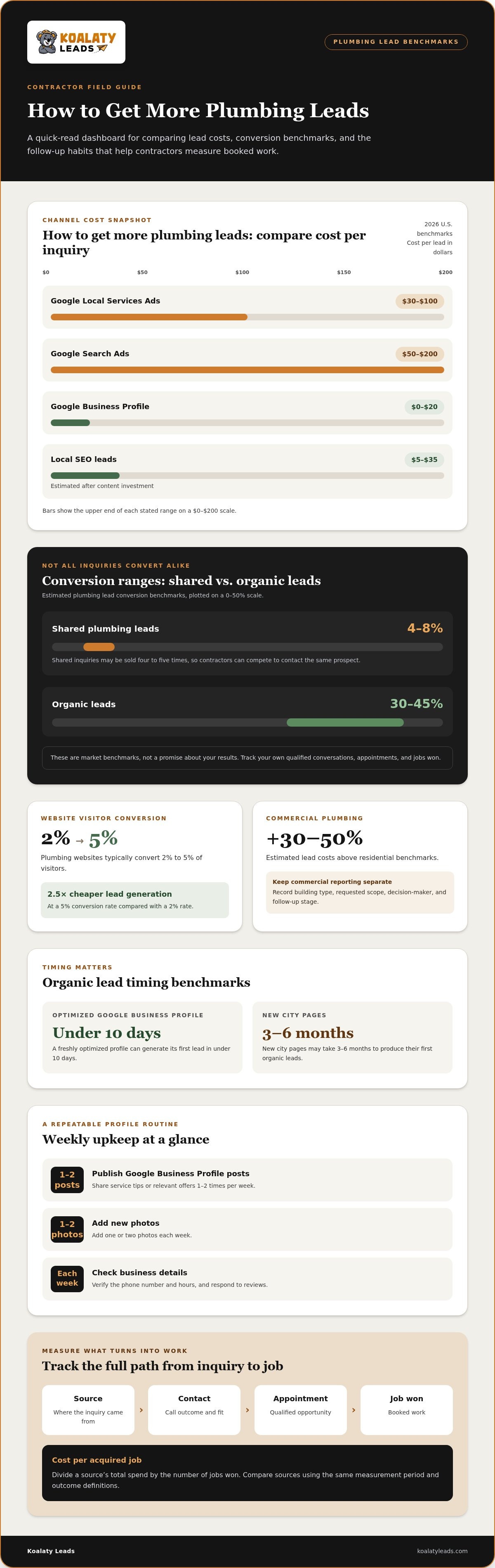
For plumbers, Google Local Services Ads, Google Search Ads, and local organic visibility are practical starting points. The 2026 U.S. benchmarks are $30-100 per lead for Local Services Ads, $50-200 for Search Ads, and $0-20 through a Google Business Profile. Local SEO leads are estimated at $5-35 after content investment, so compare sources by booked jobs, not just lead price.
For practical ideas on building a steadier plumbing pipeline, watch this video:
Consider Local Services Ads if your business can complete Google’s background check and license verification. Verified businesses receive a blue checkmark, and reviews in the Local Services Ads account can help an ad rank higher. Respond promptly and consistently to incoming inquiries. These ads put your business in front of people actively searching for local services.
Google Search Ads offer another paid route, with a 2026 benchmark of $50-200 per plumbing lead. They can support campaigns for specific services and locations, while Local Services Ads appear above pay-per-click ads and the map pack. Compare the sources by tracking which calls become qualified appointments and booked work, rather than assuming the lowest lead cost produces the best return.
Build organic visibility alongside paid campaigns. Google’s map pack displays the top three business listings for nearby searches, so a complete business profile matters. Add accurate business details, hours, and a working phone number to your website and profile. Create a focused page for each plumbing service, then develop relevant local SEO pages for the areas you serve.
Keep the Google Business Profile active: publish 1-2 posts per week, add one or two new photos each week, and check the phone number and hours each week. Share service tips or relevant offers, and respond to reviews. A freshly optimized profile can generate its first lead in under 10 days; new city pages may take 3-6 months to produce their first organic leads.
Use a simple test before increasing ad spend: track calls by source, record which callers book, and compare the cost per acquired job. Plumbing websites typically convert 2% to 5% of visitors; a 5% conversion rate makes lead generation 2.5 times cheaper than a 2% rate. Start with the channel your team can answer and measure consistently, then improve the profile and website to support paid visibility.
2. What Are Common Obstacles in Plumbing Lead Generation?
The biggest obstacle is judging a plumbing lead by its sticker price alone. Lead-generation services may charge $10-100 per lead, while shared plumbing leads are estimated at $40-120. Shared inquiries may be sold four to five times, so several contractors can compete to contact the same prospect. Your acquisition cost depends on both lead price and the percentage that turns into paid work.
Quality and fit matter as much as volume. Shared plumbing leads are estimated to convert at 4-8%, compared with 30-45% for organic leads. These are market benchmarks, not a promise about your results. Define a qualified lead before buying: for example, an inquiry within your service area, requesting work your crew handles, and providing enough detail for a useful follow-up.
Compare sources consistently. Record each inquiry’s source, requested service, contact outcome, appointment, and sale. Divide the source’s total spend by the number of jobs won to calculate the cost per acquired job. This distinguishes a low-priced but poorly matched inquiry from a more expensive source that brings in booked work.
Google Search Ads and Local Services Ads have different cost-per-lead benchmarks, covered above. Use those ranges as planning references, then calculate your own cost per booked job using tracked calls and closed sales. The quoted lead cost is only one part of the acquisition equation.
Commercial plumbing requires its own qualification and reporting. Commercial lead costs are estimated at 30-50% above residential benchmarks. Separate commercial inquiries from residential ones in your CRM, and record building type, requested scope, decision-maker, and follow-up stage. That lets you assess whether the higher acquisition cost fits the job opportunities your team can pursue.
Your website can also lose prospects before they become trackable leads. Give each plumbing service a focused landing page, explain the work your team handles, and make the next step clear. Keep forms short, asking only for details needed to follow up, such as the service requested and location. Match the page’s message to the ad that brought the visitor.
Call tracking connects marketing spend to actual conversations. Assign a unique phone number to each major source, then review call patterns over a few weeks. Mark wrong numbers, out-of-area requests, missed calls, and qualified opportunities separately. If you want to discuss lead options for your trade and market, talk with Koalaty Leads.
Use the same measurement period and outcome definitions across channels. In a weekly review, compare spend, qualified conversations, appointments, and jobs won, then identify where prospects drop out. If calls are qualified but appointments lag, examine follow-up. If inquiries rarely fit your services, refine targeting or qualification before increasing spend.
3. Customer referrals and referral programs
Referrals turn a completed plumbing job into a direct path to another potential customer. Ask satisfied customers to refer friends or family, and make the request part of your closeout process rather than an occasional marketing effort. Recommendations from friends and family are trusted by 92% of consumers, making this channel worth building into regular operations.
Keep referrals simple. After confirming a customer is satisfied, invite them to recommend your business to someone who needs similar work. If you offer a discount or service credit for referrals, record the referring customer and resulting inquiry in your customer relationship management system. This helps you see which referral sources lead to booked work.
Set a clear handoff for every referral. When a potential customer calls, record who referred them, the service they need, and the next follow-up step. Assign someone to follow up, and ensure dispatch and the field team can see the same job notes. A missed callback or unclear appointment detail can undermine the experience that prompted the recommendation.
Request reviews consistently to support referrals and local visibility. Ask for feedback after each plumbing job, and respond to every review. Thank positive reviewers publicly. Address negative feedback calmly, apologize where appropriate, and invite the reviewer to continue the conversation privately. A consistent response process shows potential customers how your business communicates.
Make the review request part of the same closeout routine as the referral ask, but keep each request clear. Ask for an honest review, not a particular rating. Aim to request at least one Google review per week from real jobs. Customer reviews and referrals are estimated to close at 45-65%, so track their inquiries through booked appointments and completed sales instead of counting review volume alone.
Maintenance plans can give you additional reasons to stay in touch between service calls. Clearly outline the visits and reminders included, then invite customers to refer others who may value ongoing plumbing support. Keep the offer and follow-up schedule within your team’s capacity, and ensure dispatch knows which customers are enrolled and when outreach is due.
Measure the referral program with a few useful fields: referring customer, lead source, service requested, appointment outcome, and sale outcome. Referred customers are up to 57% more likely to generate further referrals, so note when a new customer sends another prospect. That pattern helps you identify whether your program produces repeatable lead generation, not just one-time introductions.
4. Facebook and Instagram advertising
Facebook and Instagram can introduce your plumbing business to local audiences before an urgent repair search begins. Build each campaign around one service, one location, and one clear next step, such as calling dispatch. A click-to-call button lets mobile prospects reach your team without searching for your phone number.
Start with a focused campaign instead of promoting every service at once. For example, create separate ads for drain service and water heater work, then compare qualified calls and booked appointments. Use local service details and real business information; avoid broad claims that don’t help nearby potential customers decide to contact you.
Paid social and Google Ads reach people at different points. Google Search Ads target people using intent-driven keywords, while Facebook and Instagram can reach local audiences who aren’t actively searching. Retarget website visitors who didn’t convert, and tie each follow-up ad to the plumbing service page they viewed.
Cold social campaigns need careful measurement. Plumbing customers from cold ads are estimated to close at 8-15%, so track each campaign through calls, appointments, and completed sales. That range is a benchmark, not a guarantee for an individual campaign. Pause ads that generate clicks but few qualified conversations, and refine the audience, service, or message.
How can plumbers use social media, email, and text marketing to attract customers? Share useful service reminders and updates on Facebook and Instagram, then invite interested visitors to opt in to email or text follow-ups. Send seasonal plumbing tips, maintenance reminders, or a relevant promotion, and track responses by channel.
Make advertising relevant to the areas you serve. Use neighborhood names, local event sponsorships, or community announcements when they genuinely relate to your business. Pair each post with a direct action, such as calling for service, and keep location details and phone numbers consistent across the ad and landing page.
Email can support paid campaigns by reconnecting with contacts who opted in. Share seasonal reminders, maintenance tips, or a plumbing case example, then use a clear link or call prompt. Email marketing can generate up to $40 for every $1 invested for plumbing businesses, but measure your own results by campaign spend and booked work.
Coordinate local SEO with paid advertising. Use consistent service names, locations, and phone numbers across your website, Google Business Profile, Facebook, and Instagram. Review campaign results regularly, comparing cost per booked job rather than likes or impressions. This gives you a practical basis for shifting budget among paid social, PPC, and organic visibility.
5. Review and referral generation
Online reviews shape the first impression your plumbing business makes across digital channels. BrightLocal reports that 92% of homeowners may read reviews for local businesses. A separate market estimate says 94% of consumers are more likely to hire a business with positive reviews, so make review quality part of your lead-generation operations.
Review volume and recency both give potential customers useful context. The average customer reads 10 reviews before trusting a business, and 89% of people aged 35 to 54 trust online reviews as much as personal recommendations. Keep your Google Business Profile accurate, then make it easy to find from your website and other customer touchpoints.
Build review requests into the job-completion workflow without scripting the customer’s opinion. After service, a technician can offer a simple prompt, while dispatch can send a follow-up message with your Google Business Profile review option. Ask for an honest account of the customer’s experience, not a particular rating or wording.
Use feedback to improve the operation behind your marketing. Sort comments by themes such as scheduling, communication, arrival updates, and follow-through. If several reviews mention the same dispatch issue, assign someone to address it and adjust the process. Better service experiences give future reviewers specific details to describe.
Respond consistently with a brief, personal reply. Thank reviewers for positive feedback and acknowledge the specific point they raised. For a negative review, remain professional, apologize where appropriate, and invite the reviewer to continue the conversation privately. A calm response shows other readers how your team handles concerns.
Give technicians a clear process and recognize consistent participation. Plumbing businesses can use bonuses, prizes, or friendly in-house contests to encourage review requests. Tie recognition to asking customers for feedback, not pressuring them for five-star ratings. This helps protect the credibility of the reviews your profile earns.
Monitoring reviews also supports local search engine optimization. Check your profile regularly for new feedback, respond promptly, and note which service details customers mention most. Use those real descriptions to clarify your website’s service pages, while keeping claims accurate. A specific review about scheduling or communication can help prospective customers understand how your business works.
Track review activity alongside lead outcomes rather than treating it as a standalone score. Record which inquiries mention Google, a review, or a personal recommendation, then compare qualified calls and booked jobs across channels. This shows whether reviews are strengthening conversion and where your customer experience needs attention.
Koalaty Leads: Roofing Leads
Koalaty Leads helps contractors looking to build a pipeline beyond plumbing with roofing leads. If your company also handles roofing, these opportunities can add a relevant service line without changing how you evaluate lead quality: track inquiries, appointments, and jobs won. Explore roofing leads to see how this offering fits your business.
Koalaty Leads also offers window replacement, bathroom remodel, and kitchen remodeling leads. Focus on the services your team is equipped to sell and fulfill, then compare each lead source by its contribution to booked work.
Visit Koalaty Leads to discuss lead options for your contracting business.
Build a Plumbing Pipeline You Can Measure
A dependable plan for how to get more plumbing leads starts with a clear operating rhythm: know which channels bring inquiries, assign someone to follow up, and review which opportunities become profitable jobs. Refine the process as your service mix, schedule, and sales capacity change. Sustainable growth comes from building a system your team can manage, not chasing every new channel at once.
For plumbing contractors considering additional lead sources, Koalaty Leads offers exclusive leads in other home-service and remodeling trades, including Roofing, Windows, and Bathroom Remodeling. Focus on opportunities that fit your business, then assess them using the same measures as your existing pipeline.
Choose a next step, put it into practice, and keep your team focused on turning qualified conversations into steady, sustainable growth.
Frequently Asked Questions
How much do plumbers pay for leads?
There’s no single rate across plumbing lead sources. Costs depend on whether you buy an inquiry, a live call, or advertising clicks, plus targeting, competition, and whether the opportunity is exclusive. To compare fairly, calculate channel spend divided by jobs won, then review lead qualification and close rates. That cost per acquired job is more useful than comparing inquiry prices alone.
Should I do Google Ads or Local Service Ads first?
Consider Local Services Ads if your business can complete Google’s required background check and license verification, and your team can respond consistently to calls. Choose Search Ads when you need more control over keywords, service-specific campaigns, and landing pages. Whichever you test first, define a qualified plumbing inquiry and track it through booked work before increasing spend.
What Are Common Obstacles in Plumbing Lead Generation?
Common problems include duplicate competition for shared inquiries, weak follow-up, poor source tracking, and leads that don’t fit your services or capacity. Some shared-lead platforms sell the same inquiry to four or five contractors, so response speed can affect your chance to speak with the prospect. Set clear qualification criteria and record why each inquiry was won, lost, or disqualified.
What's a normal cost-per-lead for plumbers?
There isn’t one normal cost per lead across channels. An ad inquiry, an organic website contact, and a live call aren’t equivalent opportunities. Compare each source using consistent definitions for a qualified lead, booked appointment, and sold job. A lower inquiry cost may still mean a higher acquisition cost if fewer callers qualify or schedule. Use your closed-job data to set a sustainable target.
What are the best ways for plumbers to generate more leads?
A practical plan for how to get more plumbing leads combines sources with different strengths: local organic visibility, paid search, customer referrals, reviews, and carefully targeted social advertising. Start with channels your team can manage and measure, then add another when follow-up is reliable. Track each inquiry from first contact to sale, and shift effort toward sources producing the right kinds of jobs.
How can plumbing companies improve local SEO and Google Business Profile rankings?
Keep your Google Business Profile complete and aligned with your website, including accurate services, business hours, location details, and phone number. Publish useful updates, add genuine job photos, and respond to reviews regularly. Create a relevant page for each service and area you serve, with clear contact options. Consistent business details across online profiles help prospects recognize and reach your company.
How can plumbers get more referrals and online reviews?
Make review and referral requests part of your job-completion workflow. Ask customers for honest feedback after service, then record referral sources in your CRM so you can connect introductions to booked jobs. Respond to every review with a personal, professional reply. If a concern arises, acknowledge it calmly and move detailed customer discussions to a private channel rather than debating publicly.
What are effective ways to generate plumbing leads in a specific local service area?
Define the services and locations your dispatch team can cover, then reflect those boundaries in campaigns and website pages. Create location-specific pages around real services, such as drain work or water-heater service, and make each page easy to call from. Review inquiries by area and job type, adjusting targeting when calls fall outside your coverage or don’t match your crew’s capacity.
Need exclusive leads instead of shared ones? Koalaty Leads delivers qualified homeowners — web leads or live call transfers — to one contractor only.
Get Started