
How to Get Commercial Roofing Leads: 7 Proven Strategies
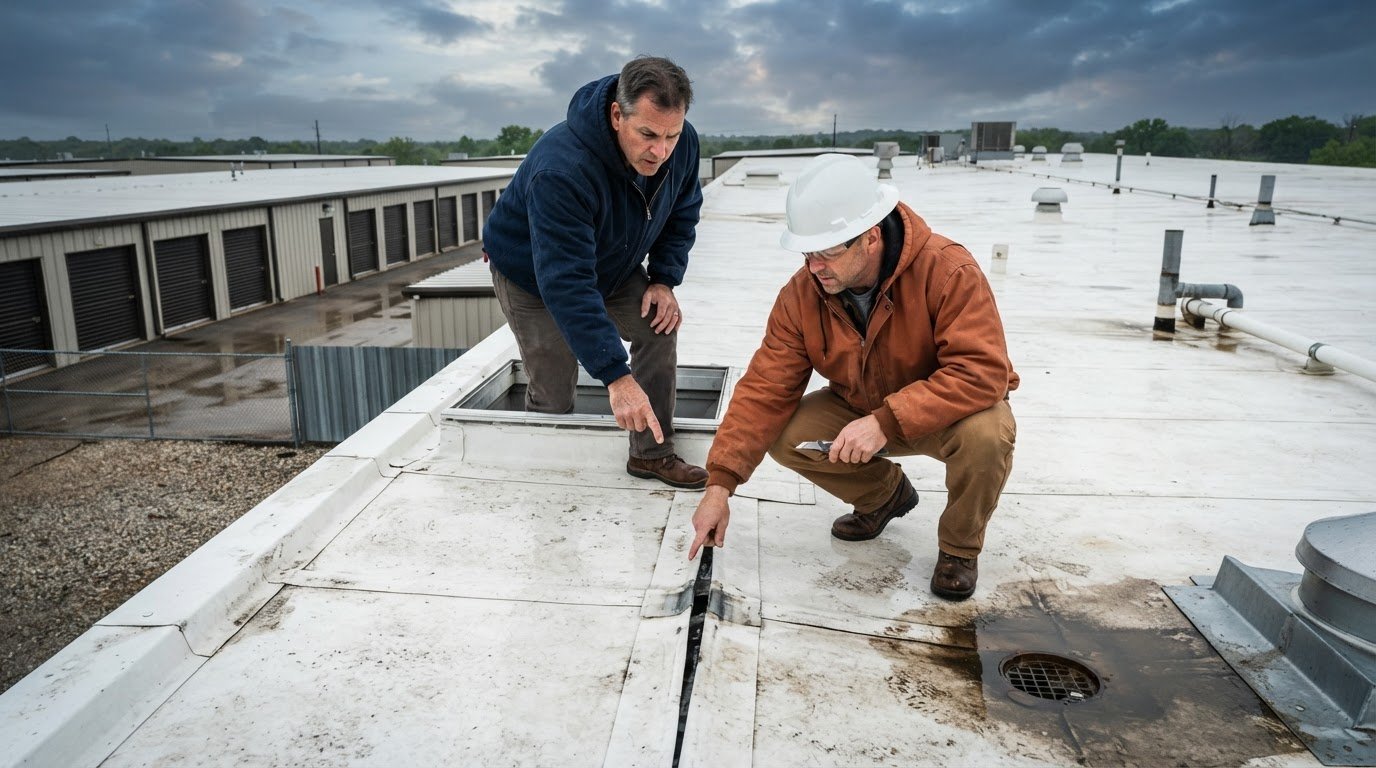
Commercial roofing leads come from focused outreach to property owners and managers, supported by advertising that reaches relevant decision-makers. To learn how to get commercial roofing leads, start by accounting for how these prospects differ from residential ones: commercial projects often involve multiple stakeholders, larger scopes, and longer sales cycles, so each inquiry needs careful qualification.
Generating more names is not enough. You need prospects with a genuine roofing need, a viable project, and a clear path to a decision. A lead’s potential value depends on the project scope, your access to the decision-maker, and how effectively your sales process turns inquiries into jobs.
This guide explains what distinguishes commercial leads from residential ones, how to assess their potential value, and how paid advertising can support your pipeline. It also covers practical prospecting strategies, including targeted outreach, partnerships, and referrals, so you can build a consistent approach without relying on a single source.
Key Takeaways
- Commercial prospects often involve different decision-makers and longer sales cycles than residential inquiries, so lead qualification and follow-up need to match the job.
- Assess a lead by its project potential and your cost to acquire a customer, not just by the price of an inquiry.
- Evaluate paid campaigns by how well they reach commercial decision-makers and by the results they produce across your sales pipeline.
- Compare door-to-door prospecting with outreach, digital campaigns, and referrals to find a mix that fits your team and budget.
- Consider whether exclusive roofing leads or live transfers fit your trade and market, then discuss the options with Koalaty Leads.
How to Get Commercial Roofing Leads: What Makes Them Different
Commercial roofing lead generation should reach business decision-makers and account for longer project reviews. Choose an approach that fits your target properties, sales process, and capacity to handle inquiries.
-
Assess Commercial Lead-Generation Challenges When Choosing a Provider
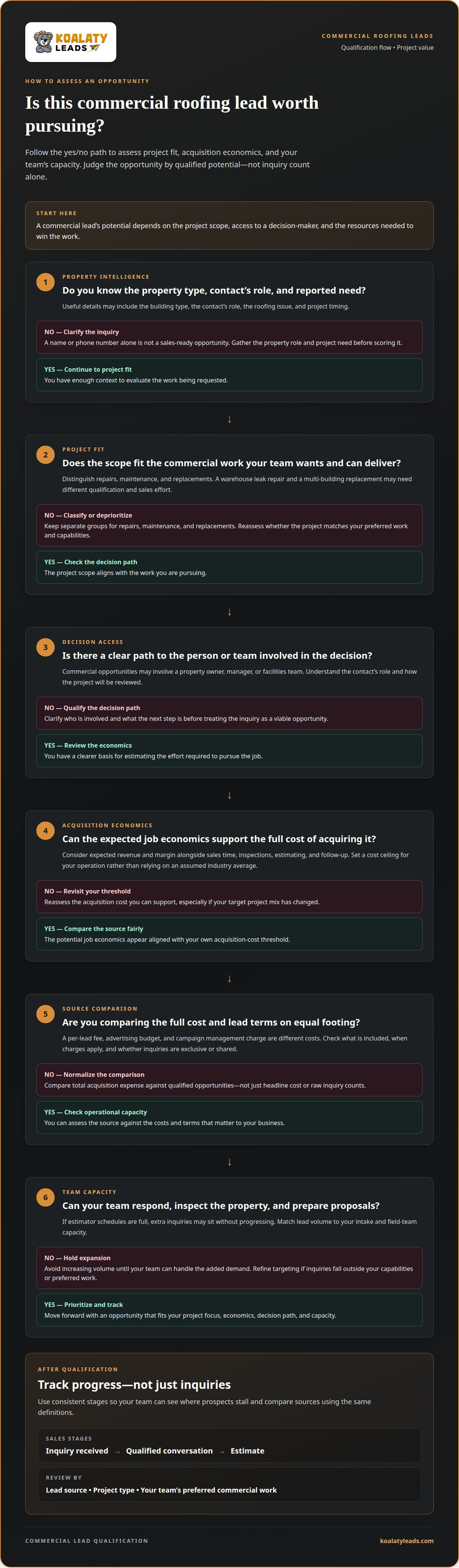
Define the commercial work you want before comparing lead sources. A warehouse leak repair, office replacement, and retail maintenance request each need different qualification. Ask how a source distinguishes commercial prospects from residential requests and what information comes with each lead. Check whether the contact’s property role and project need are clear. A name or phone number alone is not a sales-ready opportunity.
-
Compare Commercial and Residential Lead-Generation Approaches
Choose a lead source designed to reach business properties and commercial decision-makers. Residential outreach may reach one homeowner, while a commercial opportunity can involve a property owner, manager, or facilities team. An inquiry about a multi-building portfolio, for example, needs different qualification from a single-home replacement request. Review whether the targeting and intake distinguish these prospects before assessing lead volume.
- Set realistic launch expectations. Before work begins, clarify setup steps, campaign launch timing, and review points. Share your service area, project focus, and intake requirements early. A new source may take time to show which messages and prospects fit your operation. Evaluate early activity for alignment rather than treating it as a promise of immediate projects.
- Agree on useful reporting. Set a reporting schedule and decide which stages to track, from inquiry received to qualified conversation and estimate. Separate, for example, a property manager’s repair request from an inquiry that lacks a commercial property. Consistent status labels help your sales team and lead source identify where prospects stall, without confusing raw inquiries with viable opportunities.
- Scale based on operational capacity. Before increasing lead volume, assess whether your team can respond promptly, inspect properties, and prepare proposals. If your estimator’s schedule is full, extra inquiries may sit without progressing. Expand only when your intake and field teams can handle added demand. Refine targeting if the source brings projects outside your crew’s capabilities or preferred commercial work.
How Much Is a Commercial Roofing Lead Worth?
A commercial roofing lead’s value depends on the project it can produce and the resources required to win it. Region, climate, and storm activity influence demand: storm-related inquiries may emphasize urgent repairs, while other markets may favor planned maintenance or replacement. Match your lead strategy to the work your team wants and can deliver.
- Set a lead-cost ceiling from job economics. Start with the revenue and expected margin of the commercial projects you pursue. Account for sales time, inspections, estimating, and follow-up before deciding what acquisition cost is sustainable. This sets a threshold for your operation rather than relying on an assumed industry average. Revisit it when your target project mix changes.
- Compare pricing structures on equal terms. A per-lead fee, an advertising budget, and campaign management charges represent different costs. List what each option includes, when a charge applies, and whether the inquiry is exclusive or shared. Compare total acquisition expense against qualified opportunities, not just raw lead counts. That distinction helps prevent a low headline cost from obscuring extra work.
- Use property intelligence to estimate fit. Review the building type, contact’s role, reported issue, and project timing. An active leak at a commercial facility may suit a repair crew, while a portfolio-wide replacement inquiry may require estimating capacity and a longer sales process. Prioritize details that point to a genuine property need and an accessible decision-maker.
- Build a lead score tied to your services. Prioritize prospects whose project scope, property type, timing, and decision path fit your operation. Keep separate groups for repairs, maintenance, and replacements. This helps your team direct the right sales effort to each opportunity instead of treating every form submission as equally valuable. Adjust your criteria as your commercial focus changes.
- Choose notification and intake requirements. Decide what your team needs to know when an inquiry arrives. A repair lead may require the property address and reported issue; a planned project may call for its scope and timing. Clear intake fields help sales staff determine who should respond and what to ask next.
- Review value by source and project type. Compare paid campaigns, organic inquiries, and provider-supplied leads using the same definitions. Distinguish a qualified estimate request from a contact seeking general information. This gives you a clearer basis for refining how to get commercial roofing leads and identifying sources that support your preferred work. Reassess the mix as market conditions shift.
Evaluating Paid Advertising as a Source of Commercial Roofing Leads
Paid campaigns can generate commercial roofing inquiries by connecting targeted ads with landing pages, calls, or forms. Assess them by audience fit, message, intake quality, and the sales opportunities they produce.
- Define the campaign’s target. Specify the property types, roofing services, and decision-makers you want to reach. An ad for commercial leak repairs should speak to property managers dealing with maintenance issues; replacement ads may suit owners planning larger projects. Give the campaign clear service boundaries and exclusions to avoid spending effort on residential requests or work your crews do not handle.
- Match the ad platform to buyer intent. Search ads can reach prospects actively looking for commercial roofing help. Social campaigns can introduce your services to property managers before a project becomes urgent. Review the ad, landing page, and call or form path together. If an ad promotes commercial repairs but the page focuses on residential services, the mismatch can attract the wrong inquiries.
- Use a focused commercial video. A 30-45-second Facebook video can show completed commercial projects and explain the specific work being promoted. Keep the message relevant to property managers, not homeowners. Run a campaign at least once per month, then show another ad to people who engaged with or watched more of the video. That follow-up gives the campaign a clear next message.
- Clarify what counts as a lead. Before launch, decide whether the campaign captures phone calls, form submissions, or both. Check which fields collect property type, location, contact role, and stated need. A short form can make responding easier, while additional questions may provide useful context. Choose fields that support sales conversations without making the request cumbersome.
- Understand the cost components. Separate advertising spend from management charges and any fee for each delivered inquiry. Confirm how spending is controlled and what the reports show. Compare qualified opportunities and won jobs with total campaign cost. Clicks and video views indicate engagement, but do not show whether the campaign generates commercial roofing work.
- Use sales outcomes to refine the campaign. Record which ads lead to relevant calls, site assessments, proposals, and jobs. Share patterns with the provider, such as ads that attract repair requests but few replacement projects. Use that evidence to adjust the audience, offer, or landing-page message. Expand only when your team can manage the inquiries and the campaign supports your sales goals.
Alternatives to Door-to-Door Commercial Roofing Leads
- Build direct outreach around property managers. Create a focused list of commercial properties and contact the managers responsible for maintenance. Offer a specific service, such as commercial roof leak repairs, rather than a broad sales pitch. This approach requires staff time and contact research instead of an advertising budget. Track replies and booked inspections to see whether it generates qualified opportunities.
- Use rain-triggered email outreach for repair demand. When rain makes roof concerns timely, send property managers a concise message about leak repairs. Focus on the service and a simple next step, such as discussing a reported leak. Account for contact-list upkeep, writing, and campaign tools. Compare replies and appointments with the staff time needed to send each campaign.
- Turn completed projects into proof-led landing pages. Feature a commercial roofing project, the property challenge, and the work completed. A project story gives decision-makers useful context without leading with price or crew descriptions. Budget for writing, photography, page design, and promotion. Track inquiries from the page separately to see whether project examples attract the commercial work you want.
- Offer a practical resource in exchange for an email. Create a downloadable commercial roof maintenance checklist or planning guide, then use a short form that requests only an email address. This makes responding easier, but the contact may not have an immediate project. Account for resource development and promotion, then segment subscribers by later interest in repairs or replacement.
- Compare channels by total cost and sales progress. Door-to-door prospecting uses travel and employee hours; email and resources require content and list maintenance; landing pages may need ongoing promotion. Paid campaigns add media costs, while project pages can continue attracting prospects after publication. Track cost per qualified inquiry, appointment, and won job for each method. Keep funding behind channels that generate commercial opportunities your team can serve.
Partnerships and Referral Sources for Commercial Roofing Leads
- Prioritize partners with regular property access. Build a target list of property managers, commercial real estate agents, and insurance adjusters. They may encounter owners facing roof leaks, repair needs, or replacement planning. Start with partners whose properties and clients match your service area and project capabilities. A referral is useful when it aligns with work your crews can take on.
- Offer a defined first step. Roofing contractors can offer local real estate agents, insurance adjusters, and property managers free roof inspections and repair estimates within a 24-hour timeframe. Make the offer specific, such as assessing a reported leak at a commercial property. Clarify what information you need to respond, including the property location, contact person, and stated concern.
- Set a clear referral handoff. Agree on how a partner introduces your business and what details accompany each prospect. For example, a property manager can share the building address, reported issue, and best contact for follow-up. Keep the process simple for a busy agent or adjuster. Informal introductions without context can leave your sales team unprepared.
- Track each partner separately. Record the referral source, property type, roofing need, first contact, appointment, estimate, and job outcome. A commercial real estate agent may refer during a sale, while a property manager may identify recurring repair needs. Track these sources separately in your CRM to see which relationships produce qualified conversations and which bring inquiries outside your target work.
- Evaluate partner quality by sales progress. Check whether referred prospects can reach a decision-maker, have a relevant project, and fit your service area. Track completed appointments and won jobs alongside raw introductions. If an insurance adjuster refers a claim-related concern, record the actual request and next step without assuming it will lead to a roofing contract.
- Maintain relationships with useful follow-up. After an introduction, send partners a concise update, such as confirmation that you reached the property contact. Share relevant project examples or service information they can pass to commercial clients. Check in regularly about their business needs, then compare referral results with the time your team spends maintaining each relationship.
Koalaty Leads for Roofing Contractors
Koalaty Leads provides roofing leads for contractors seeking another source of potential projects. Its offerings include exclusive web leads and live inbound call transfers, delivered on a pay-per-lead basis. For commercial roofers, the right fit depends on the project types they pursue, their target market, and how their sales team handles inquiries.
Exclusive leads give your business an opportunity to respond without competing with other buyers for the same inquiry. A live transfer connects a caller with your team for direct conversation, while pay-per-lead charges for delivered leads. Each approach has a different intake rhythm, so consider your team’s availability and follow-up process before choosing.
- Define the work you want to pursue. Specify whether you focus on commercial repairs, leak response, or planned replacement projects. Explain the property types and locations that fit your operation. Clear priorities make a discussion about roofing leads more useful than a general conversation about inquiries.
- Match the lead format to your sales process. Consider whether your team can respond to live inbound call transfers as they arrive or prefers to manage exclusive web leads through its regular follow-up process. The right fit depends on staffing, call handling, and how your sales team moves a prospect toward a site assessment or estimate.
- Set practical expectations for evaluation. Track each inquiry from first contact through qualification, appointment, proposal, and sale. Record whether the property and project suit your commercial capabilities. These results help you assess lead value against your own job economics rather than relying on inquiry volume alone.
- Discuss market fit before choosing an approach. Bring your target locations, preferred project types, and lead-handling process to the conversation. This gives you a concrete basis for discussing whether exclusive web leads or live inbound call transfers suit your operation. Neither format is automatically right for every roofing contractor.
Koalaty Leads can discuss roofing leads in the context of your trade, market, and sales process. For a practical conversation about whether exclusive leads or live transfers fit your business, contact Koalaty Leads.
Frequently Asked Questions
What are the best sources for commercial roofing leads?
Useful sources include high-intent search inquiries, paid campaigns, referrals, and exclusive leads from a provider. The right mix depends on whether your sales team needs immediate conversations or prospects to qualify over time. Compare sources by project fit, decision-maker access, and the next step each inquiry supports. A property manager reporting an active leak has a more urgent need than someone researching future roof work.
How can commercial roofers evaluate leads from Google Search and local SEO?
Look beyond rankings and clicks. Check whether search inquiries identify a commercial property, describe a roofing need, and reach someone involved in the project. Separate commercial requests from residential ones in your sales records, then track each through contact, appointment, proposal, and sale. Google, Yahoo, and Bing are among the traffic sources used for lead generation, but your pipeline shows which inquiries fit your business.
How much do commercial roofing leads cost from lead-generation services?
Lead costs vary by source, targeting, and service arrangement. Koalaty Leads uses a pay-per-lead model for exclusive web leads and live inbound call transfers; organic and paid-search leads have different pricing from standard leads. Compare the fee with your qualified-opportunity rate and cost to acquire a job, not just the number of inquiries. Your sales outcomes show whether a source makes financial sense.
Which marketing channels produce the highest-quality commercial roofing leads?
High-intent organic and paid-search leads tend to produce stronger appointment-setting results than standard leads. Koalaty Leads lists a 30-40% appointment-set rate for organic and paid-search leads, compared with 15-25% for standard leads; 40-50% of appointments convert to sales. Treat these as channel benchmarks, not a forecast for your company. Track qualified appointments and closed jobs to identify the best fit for your pipeline.
How can roofing contractors access commercial property owners and facility managers through lead providers?
Use a provider that delivers exclusive web leads or live inbound call transfers, then assess whether each inquiry fits your commercial work. Koalaty Leads qualifies leads through a 13-point stack. Share your target project types and serviceable zip codes so the conversation centers on fit. If you cannot service a zip code, the lead must be re-assigned at no cost to the contractor.
How can roofing contractors evaluate prospects identified through LinkedIn, email, and cold calling?
Assess each prospect’s company, property responsibility, stated roof concern, and authority to move a project forward. A LinkedIn title or email reply alone does not establish a genuine roofing opportunity. Record what the prospect says, distinguish active repair needs from general interest, and identify the appropriate decision-maker before assigning sales effort. Use consistent qualification criteria so your team can compare eventual outcomes.
How can roofing contractors qualify and follow up with commercial roofing leads from a provider?
Confirm the property type, roofing need, project timing, and contact’s role. Then assign a clear status, such as reached, needs follow-up, qualified, or not a fit, and record each contact attempt. For a live inbound call transfer, capture the caller’s stated concern while it is fresh. Review stalled leads regularly and tailor the next follow-up to the information already collected.
Need exclusive leads instead of shared ones? Koalaty Leads delivers qualified homeowners — web leads or live call transfers — to one contractor only.
Get Started