
High-Quality Home Remodeling Leads: A Contractor's Guide

Home remodeling leads can be worth buying when the cost of acquiring a job fits your margins and the inquiries match the projects you want to sell. The lead source matters, but so do exclusivity, service area, project type, and how quickly your team follows up.
It’s reasonable to ask whether paid leads can turn into profitable work, especially when kitchen and bathroom projects differ in scope and sales cycle. This guide explains how to evaluate lead services, what affects lead costs, and how to compare options with your budget and close rate. You’ll also learn how to assess whether an inquiry fits your service area and project mix before committing budget. The aim is a more deliberate pipeline, not simply a higher lead count.
Key Takeaways
- Assess whether a lead source can produce profitable jobs by tracking follow-up, appointments, and closed work, not just inquiry volume.
- Compare kitchen and bathroom lead costs with the project types and margins your team can handle.
- Filter opportunities by service area, project fit, and budget so your sales team spends time on leads that match your business.
- Use referrals, project photos, and digital channels as distinct parts of a pipeline, then judge each by the jobs it helps you win.
- Understand the contact and consent considerations involved in buying and following up with leads before setting your process.
Are remodeling lead generation services worth it?
Home remodeling leads can justify the spend when qualified inquiries become profitable jobs. Compare each campaign’s cost with the appointments, signed contracts, and project fit it delivers.
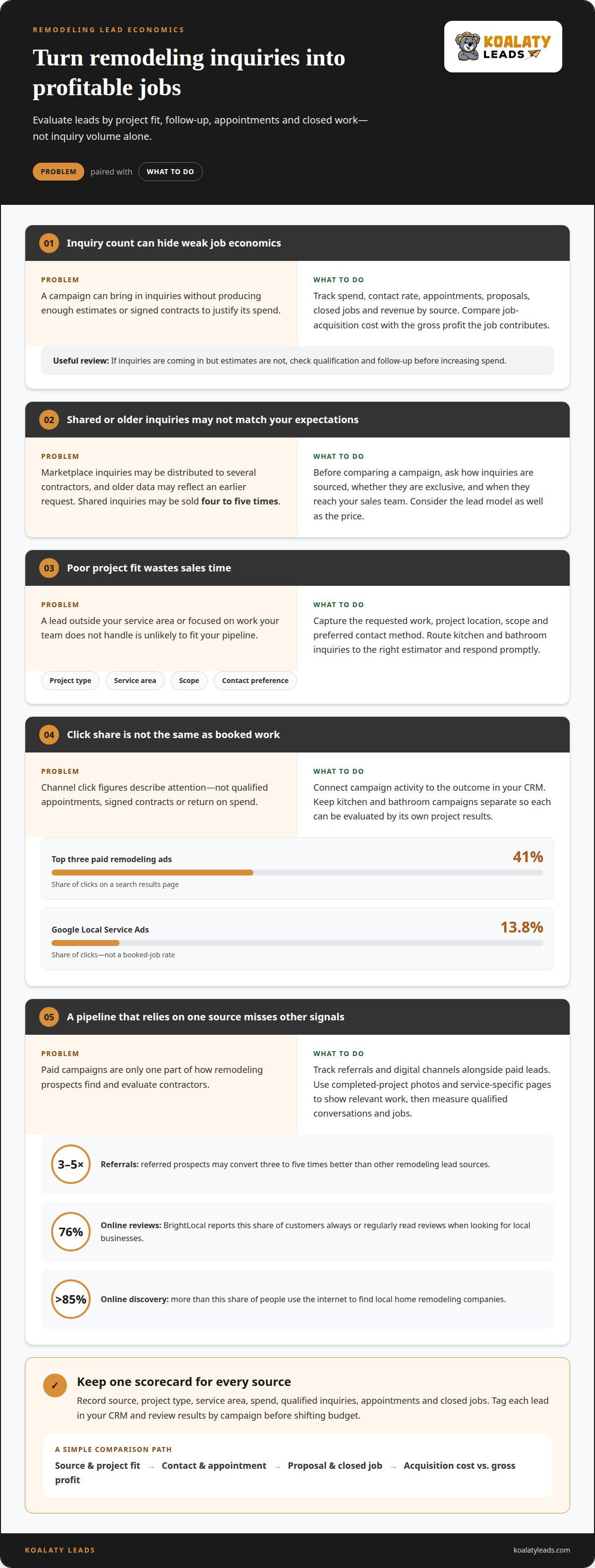
Referrals can strengthen lead generation because referred prospects may convert three to five times better than other remodeling lead sources. Build a repeatable process: ask satisfied customers for introductions after a project, then record each referral and its outcome in your CRM. Referral programs may start producing results in the first month, but track booked work rather than assuming every introduction will close.
Completed-project photos give homeowners a concrete reason to engage. Add clear images to service pages, project profiles, and follow-up emails, with captions identifying the work, such as a kitchen renovation. Use photos from jobs your team completed and organize them by service, so bathroom prospects see relevant examples rather than unrelated work.
Lead platforms can bring in demand beyond referrals, but their models differ. Some marketplaces distribute an inquiry to several contractors, while older data may reflect an earlier request. Other platforms use bid-to-appear models. When comparing these with pay-per-lead campaigns, ask how inquiries are sourced, whether they’re exclusive, and when they reach your sales team. Shared inquiries may be sold four to five times, making prompt follow-up and a clear process important.
Lead Qualification and Homeowner Engagement
Qualification helps determine whether a homeowner’s project fits your services, service area, and sales process. Capture the requested work, project location, scope, and preferred contact method, then route the inquiry to the right estimator. A kitchen inquiry shouldn’t sit in a general queue while the team handles unrelated requests. Respond promptly, confirm the details, and log the outcome.
Lead Costs and Profitability
Judge lead costs by the jobs they help you acquire, not by the inquiry price alone. Track spend, contact rate, appointments, proposals, closed jobs, and revenue by source in one report. If a campaign generates many inquiries but few estimates, review qualification and follow-up before increasing spend. Compare the cost of acquiring a job with the gross profit it contributes.
A CRM makes those comparisons more useful. Connect lead forms and call records to the same contact record where possible, then assign an owner and next action. Tag each inquiry by source and project type, for example, so managers can compare kitchen and bathroom campaigns without mixing their results.
Content and reviews support generation by helping prospects assess your work before contacting you. Publish project photos alongside service-specific details, and request reviews after completed jobs. BrightLocal reports that 76% of customers always or regularly read online reviews when looking for local businesses, making review response part of homeowner engagement, not an afterthought.
What do kitchen and bathroom remodeling leads cost?
Lead costs and demand vary by location, project type, and campaign model. Kitchen and bathroom inquiries can differ in intent, scope, and competition, so assess each source by qualified appointments and acquired jobs. An inquiry that matches your target project and service area has a different business value from one your team can’t pursue.
Separate advertising spend from the amount paid for each lead. With pay-per-click advertising, you pay when someone clicks, not simply when an ad appears. Lead costs then depend on click costs, landing-page response, and the number of inquiries that become qualified appointments. Pay-per-lead programs charge for inquiries, so assess exclusivity and the information provided with each lead before comparing models.
Search advertising can put a remodeling company in front of people actively finding contractors. About 41% of clicks on a search results page go to one of the top three paid remodeling ads. Google Local Service Ads get about 13.8% of clicks. Those figures describe click share, not booked jobs, so track the path from click to signed contract in your CRM.
Location changes the competitive picture. A campaign targeting a dense metro may compete with more advertisers than one serving a smaller market, while service-area boundaries determine which inquiries your team can handle. Project type matters too. Give kitchen and bathroom campaigns separate landing pages and conversion tracking so estimates and outcomes remain tied to the right work. Contractors can compare their kitchen remodeling leads with bathroom inquiries instead of blending both into one report.
Digital marketing works best when each channel has a defined job. Paid search can capture active demand; useful content can answer early research questions; project photos can show the work your crew handles. More than 85% of people use the internet to find local home remodeling companies, so keep service pages current, specific, and focused on the projects you want to sell.
Content marketing gives a campaign value beyond the initial click. Build articles or short videos around your top 10 frequently asked questions, such as what information helps scope a remodel or how estimates are scheduled. Give each page one relevant inquiry form, then track which topic generates qualified conversations rather than page views alone.
Strategic alliances can extend your reach beyond advertising. A kitchen designer, cabinet showroom, or bathroom-focused trade may meet prospects early in their research. Agree on the audience, referral process, and lead attribution before co-marketing. Then compare the resulting appointments with paid channels using the same qualification criteria.
Use a scorecard to record source, project type, service area, spend, qualified inquiries, appointments, and closed jobs. Review results by campaign before shifting budget. This shows whether a channel attracts demand your team can serve and supports profitable growth.
Matching leads by project, location, and budget
Start with three filters: the work you want, the places you serve, and the acquisition cost your margins can support. Apply them before expanding a campaign, so your pipeline reflects actual crew capacity rather than broad inquiry volume.
Separate kitchen, bathroom, and basement inquiries in your CRM. Each project type needs different qualifying details and sales materials. A kitchen inquiry might concern a full renovation, while a bathroom request could be for a focused update. Basement projects may call for an early conversation about scope and intended use. Tag each inquiry by project, then compare appointments and closed work by category.
Set service-area boundaries based on where your crews can complete projects efficiently. Include the places you serve and exclude locations that make scheduling or travel impractical. Make sure your Google Business Profile and service pages describe the same coverage. Review incoming lead addresses against your service map before paying for additional campaign reach.
Set your budget according to capacity and conversion, not a platform’s suggested spend. Establish a ceiling for each project category, then track spend alongside qualified inquiries, appointments, proposals, and sold jobs. If a campaign attracts leads outside your service area, refine its geographic targeting. If the location fits but the project scope doesn’t, adjust the offer or qualification fields.
Public and private projects require different research. For government work, review public procurement portals and bid documents for scope, submission instructions, and project fit. For private projects, build relationships with property managers, designers, and other businesses that encounter renovation work. Keep residential lead campaigns separate from bid research so estimates and sales follow-up don’t get mixed up with procurement deadlines.
Commercial bidding platforms can surface opportunities, but a listing isn’t automatically a qualified lead. Before investing time, compare the stated scope with your trade, service area, crew availability, and estimating capacity. Record the source, bid status, and outcome in your CRM. This helps you see whether a platform generates viable projects or simply adds proposal work.
Premium profiles and project portfolios can help clients assess your fit before contacting you. Keep project descriptions specific, organize completed work by category, and use clear photos that represent the jobs you want more of. Update service areas and contact details together. A polished portfolio works best when its examples match the prospect’s project type and location.
Choose an exclusive lead source if direct competition for the same inquiry is a key concern. Compare its terms with marketplace models, where multiple contractors may pursue one prospect. The right fit depends on your team’s follow-up process, the project’s expected value, and how consistently the source matches your selected service area.
Review your scorecard by project and location before changing your budget. Keep the categories that produce qualified opportunities, refine targeting that misses, and pause campaigns your team can’t serve.
Kitchen and bathroom remodeling leads
Kitchen and bathroom inquiries need separate qualification paths, sales materials, and estimate workflows. A lead for a cabinet update differs from one for a full kitchen renovation. Treating them alike can waste estimator time and obscure campaign results. Build intake questions around the work your crews actually want to sell.
For kitchen prospects, record the requested work, property location, project scope, and preferred next step. A cabinet replacement may call for a different estimate conversation than a full layout change. Tag each inquiry by project type and source so your remodeling business can compare which campaigns produce appointments that fit its services.
Bathroom inquiries also need clear distinctions. Separate general bathroom renovations from focused projects such as accessible upgrades or walk-in tubs. Ask what work the prospect wants and whether it fits your service area. Route the inquiry to a salesperson prepared to discuss that category, rather than sending every request through one generic script.
Lead generation services may deliver inquiries through web forms or live calls. For a form lead, review the submitted project details before the first conversation. For a transferred call, confirm the requested work and location directly. In either case, record the source and outcome in your CRM to create a consistent basis for comparing channels.
Tie the estimate process to the project the lead described. A kitchen inquiry should receive follow-up focused on kitchen scope, while a bathroom prospect needs relevant questions and examples. Use project photos and service-specific pages to support the discussion. If the request changes during qualification, update the CRM category so later reports reflect the actual opportunity.
Compare campaign performance by project, not just by total inquiries. Track how many leads become qualified conversations, scheduled estimates, proposals, and signed work. If a source produces kitchen requests but few estimate appointments, review the intake questions and follow-up language. If bathroom leads fit your services but stall later, examine the estimate process separately.
Before scaling a campaign, define what counts as a qualified lead. Specify eligible project types, acceptable locations, and the details your sales team needs. Share that definition with the people handling calls and forms. Consistent labels make it easier to judge whether an inquiry fits, whether an estimate progressed, and which lead generation services support your project mix.
What rules apply to buying and contacting home remodeling leads in the U.S?
Set a documented process for reviewing lead origin, contact permissions, and opt-out requests before launching outreach. Requirements can vary by source, communication method, and location, so keep purchasing records and follow-up procedures together. A clear process helps your team handle an online form differently from a call transfer without making assumptions about either inquiry.
For each purchased lead, save its source, submission time, project category, and accompanying permission details. A bathroom inquiry, for example, might include a form record and its original consent language. Store those materials with the CRM entry so the salesperson can review the context before making contact.
Match each follow-up channel to the permission information provided with the inquiry. A web form submission isn’t automatically a request for every type of outreach. Create separate steps for calls, texts, and emails, and record which channel your team used. This gives managers a practical way to review contact activity.
Make opt-out requests visible to the whole sales team. If a prospect asks not to receive further contact, record the request in the CRM and apply that preference to the relevant outreach process. Train staff to log the instruction whether it arrives by phone, email, or text.
State and local requirements may affect how contractors contact prospects. Have qualified counsel review your lead terms and outreach procedures for the states and channels involved. Review them again when your business enters a new market or adds a contact method, and document any resulting process changes for sales staff.
Before purchasing from a platform, review its terms for lead origin, permission details, permitted use, and limits on follow-up. Keep the applicable terms with your vendor records instead of relying on a salesperson’s summary. If the platform changes its process or terms, record the new version and update internal procedures as needed.
For each inquiry, keep a consistent record of its source, project type, location, permission details, contact attempts, and any opt-out. Limit access to staff who manage leads, and keep records in approved business systems rather than personal inboxes. Periodically review a sample of entries to confirm the team is recording the same information.
Use this workflow to keep lead purchasing and outreach organized. A qualified legal review can help align your procedures with the jurisdictions and communication channels your business uses.
Koalaty Leads: Roofing Leads
Koalaty Leads offers exclusive leads and live transfers for contractors who want direct opportunities rather than shared inquiries. For remodeling businesses, its kitchen remodeling leads and bathroom remodel leads connect the service to the project types discussed in this guide. These options may fit contractors who have defined their target projects, service area, and sales follow-up process.
Choose a lead type that fits how your team works. Live inbound call transfers connect you directly with homeowners, while exclusive web leads provide another way to source inquiries. Assess each opportunity against your project mix and capacity, then measure its progress through appointments and closed jobs.
Talk with Koalaty Leads about remodeling leads for your trade and market, or visit the Koalaty Leads website.
Build a Lead Pipeline Around the Work You Want
A dependable pipeline starts with a clear decision about the projects your team wants and how it will assess each opportunity. Use that focus to shape your home remodeling leads strategy, then measure whether incoming opportunities fit your sales capacity. The goal is a pipeline your team can manage, not simply a fuller inbox.
Koalaty Leads offers exclusive leads for Roofing, Windows, Bathroom Remodeling, Gutters, Siding, HVAC, Kitchen Remodeling, Flooring, Solar, Walk-In Tubs, Painting, Decks, Doors, and Plumbing. Match an offering to the work your team performs, then define the project fit you want to discuss. Clear priorities give your sales team a strong starting point for evaluating new opportunities.
Contact Koalaty Leads to discuss your needs.
Choose your next step with purpose. A focused lead strategy can help your team pursue growth with greater clarity and confidence.
Frequently Asked Questions
How can I get remodeling contractor leads for my business?
Build a lead pipeline around the services and locations your team can handle. Define the project types you want, then use channels such as Google search, paid search, social media, email, and SMS to attract relevant inquiries. For each source, use a distinct tracking label and route requests to the right salesperson. Review lead outcomes regularly, then focus on sources that produce qualified opportunities your estimators can pursue.
How many leads does the average remodeling company need each month?
A small to medium remodeling company completing four to six projects monthly may need 20 to 40 quality leads per month. Treat that as a planning reference, not a universal target. Your required volume depends on project capacity, the share of inquiries that qualify, and your appointment and close rates. Track those stages to set a target suited to your team and sales process.
What should you track to see how well your lead generation works?
Track each source from inquiry through final outcome, including whether the project fits your services and service area. Record dates for contact, estimate, proposal, and decision so you can see where opportunities stall. Log reasons for lost leads, such as timing, project mismatch, or no response. These details help you decide whether to adjust qualification, follow-up, or the channel itself.
Which places give the best remodeling leads?
The strongest source reaches prospects for your specific project type and operating area. Search inquiries can capture active demand, while social, email, or SMS campaigns can support other stages of prospect interest. Compare sources by qualified opportunities and completed sales, not raw inquiry count. Use consistent labels to distinguish kitchen campaigns, bathroom campaigns, and other project categories.
Why Invest in Home Remodel Leads?
Investing in leads can help a remodeling contractor create a more consistent path to new project conversations. A defined source also makes it easier to assess which inquiries fit your crews, sales process, and project mix. Before committing budget, identify the work you want to sell and the outcomes you’ll measure. This connects marketing activity to business decisions instead of treating inquiry volume as the only goal.
What types of remodeling inquiries are available?
Home remodeling leads are prospective customer inquiries about residential projects, such as kitchen or bathroom work. They can arrive through a web form or a phone call, including a live call transfer. Programs may differ in whether an inquiry is exclusive or shared. Koalaty Leads provides exclusive web leads and live inbound call transfers, including options for Kitchen Remodeling and Bathroom Remodeling.
Where can contractors find remodeling project inquiries?
Contractors can source home remodeling leads through channels such as Google, Yahoo, Bing, social media advertising, email, SMS, organic search, and paid search. Another option is purchasing exclusive web leads or receiving live inbound call transfers from a lead provider. Choose sources that fit your service category and operating area, then track each channel separately to assess which opportunities progress into projects.
How much do remodeling leads cost in the United States?
Lead costs vary by project category, location, source, demand, and exclusivity. Paid search has a different cost structure from pay-per-lead arrangements because advertising charges and lead charges occur at different points. Compare total acquisition spend with qualified appointments and completed jobs. For useful budget decisions, separate marketing spend from sales labor and review results by project type rather than combining every campaign.
Need exclusive leads instead of shared ones? Koalaty Leads delivers qualified homeowners — web leads or live call transfers — to one contractor only.
Get Started