
Gutter Leads: The Gutter Contractor's Buying Guide

The best gutter leads strategy connects your services, market, and sales capacity. An inquiry is useful when it matches the work your team wants and can take on. Results can vary depending on whether prospects want a small repair, routine service, or a larger project. Lead source matters, but so does what happens after an inquiry arrives.
This guide offers a framework for making those decisions without relying on raw lead volume alone. It covers acquisition costs, organic and paid search, and the intent behind different gutter services. It also explains lead delivery and outreach considerations, helping you connect marketing choices with your follow-up process. Assess whether each channel produces relevant opportunities, whether they become appointments, and whether the resulting work suits your business. The goal is a more deliberate pipeline that fits your operation.
Key Takeaways
- Compare lead costs by source and service intent, not just by the price of a single inquiry.
- Weigh SEO’s longer-term visibility against Google Ads’ paid search traffic when planning acquisition.
- Match lead options to the work you sell, from cleaning and protection to repairs, replacement, and installation.
- Understand how exclusive and shared opportunities differ, and how lead delivery can shape your sales follow-up.
- Review the rules for contacting prospects by phone, text, and email before building outreach into your process.
How much do gutter leads cost?
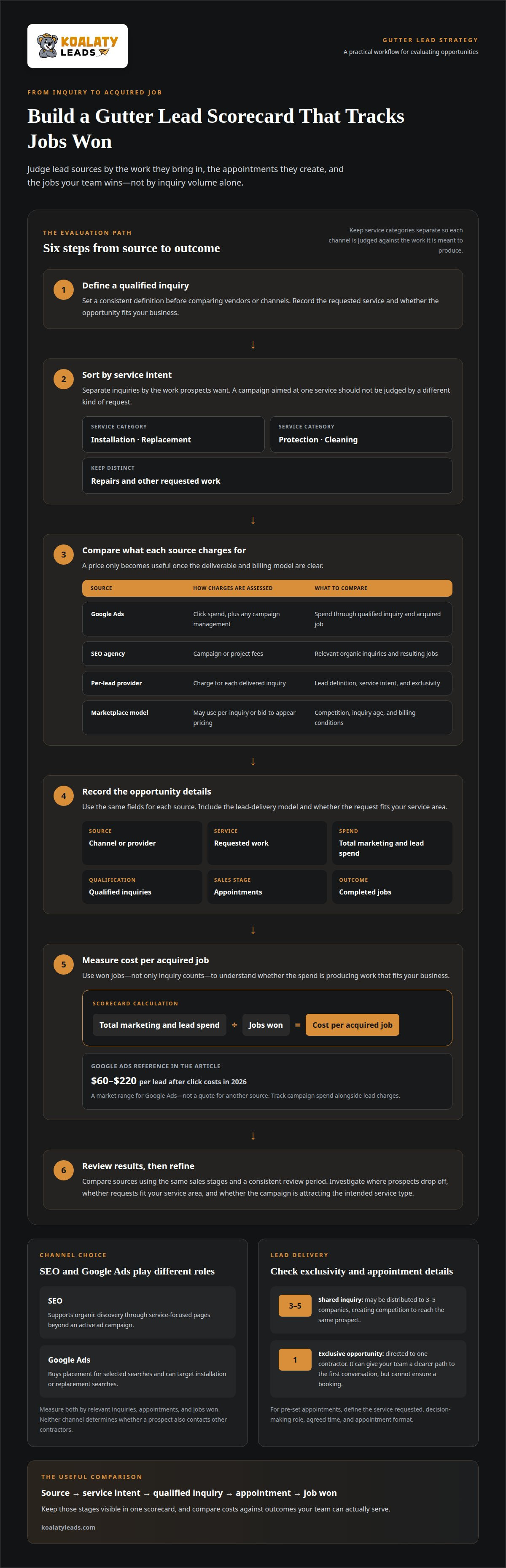
The cost depends on the acquisition channel, service requested, and billing model. Start by defining a qualified inquiry, then compare the full spend with appointments and completed jobs. For contractors evaluating gutter lead generation, a consistent definition makes vendor comparisons more useful than a headline price alone.
Separate inquiries by intended work before assessing their value. Installation, replacement, protection, and cleaning prospects can involve different scopes and sales processes. Judge a replacement campaign separately from one that attracts mostly cleaning requests. Record the requested service and use that category when reviewing costs and outcomes.
| Source or model | How charges are assessed | What to compare |
|---|---|---|
| Google Ads | Click spend, plus any campaign management | Spend through qualified inquiry and acquired job |
| SEO agency | Campaign or project fees | Relevant organic inquiries and resulting jobs |
| Per-lead provider | Charge for each delivered inquiry | Lead definition, service intent, and exclusivity |
| Marketplace model | May use per-inquiry or bid-to-appear pricing | Competition, age of inquiry, and billing conditions |
These prices are not directly comparable until the deliverable is clear. An agency may charge for campaign work, while a per-lead model charges for inquiries. A marketplace may let contractors bid for visibility. Ask how the source defines a valid lead, whether the inquiry is exclusive, and whether it is new or aged data.
For paid search, Google Ads leads for gutter contractors cost $60 to $220 per lead after click costs in 2026. Treat that as a market range, not a quote for another source. Click costs can accumulate before a prospect submits an inquiry, so track campaign spend alongside lead charges.
Build a scorecard with the source, service type, total spend, qualified inquiries, appointments, and completed jobs. Calculate cost per acquired job by dividing total marketing and lead spend by jobs won. This reveals whether a lower inquiry price actually produces efficient revenue, rather than simply filling your pipeline with requests that do not fit your work.
Compare results over a consistent review period, keeping service categories separate. If replacement inquiries lead to appointments but few sales, review where prospects drop off. If cleaning requests dominate a replacement campaign, revisit its targeting or lead criteria. This connects cost decisions to the work your business wants to win.
Should I use SEO or Google Ads for gutter leads?
SEO and Google Ads can both bring prospects into your sales pipeline, but they create visibility in different ways. SEO helps service pages appear in organic results; Google Ads buys placement for selected searches. Choose based on your timeline, campaign budget, and ability to handle inquiries, rather than assuming one channel always converts better.
Ads can put a targeted offer in front of someone searching for installation or replacement now. SEO supports discovery through service-focused pages that remain available beyond an active ad campaign. Neither channel determines whether a prospect also contacts other contractors. Measure each source by relevant inquiries, appointments, and jobs won.
Lead exclusivity is a separate question from channel choice. A shared inquiry may be distributed to 3-5 companies, creating competition to reach the same prospect. An exclusive opportunity is directed to one contractor. That can give your team a clearer path to the first conversation, but it cannot ensure the prospect will book.
Pre-set appointments add another layer. Instead of receiving only contact details, your team receives a scheduled opportunity to speak or meet. Define what makes an appointment valid: the service requested, the prospect’s decision-making role, the agreed time, and the appointment format. This distinguishes a scheduled estimate from an inquiry that still needs qualification.
Exclusive leads can reduce duplicate outreach from competing contractors. The prospect has one contractor’s conversation to focus on, and the sales team can prepare for the stated request. Appointment outcomes still depend on fit, availability, clear communication, and keeping the agreed time. Track these factors separately from lead source.
Territory limits need clear boundaries. Set the locations your crews serve and the services they accept before campaigns launch. An inquiry outside your operating area wastes follow-up effort, even if it came through a high-performing channel. Keep service area and job type visible in campaign settings and lead criteria.
Use a channel scorecard to record the source, service intent, territory fit, exclusivity, appointment status, and sale. Compare organic and paid results using the same stages. If Ads bring inquiries but few appointments, examine search intent and the handoff. If SEO inquiries fall outside your service area, refine page targeting and location information.
SEO and Google Ads can work together when each has a defined role. Ads can capture paid search demand, while SEO builds organic discovery for specific services. Review performance against your sales capacity and completed jobs, then adjust the channel mix to match the opportunities your team can serve.
Gutter replacement, repair, and installation leads
Replacement, repair, and installation inquiries reflect different buying intentions. A homeowner seeking full gutter replacement may want a new system after repeated problems or seasonal wear. An installation lead may involve a new build or addition. A repair inquiry, by contrast, may focus on a leak, loose section, or damaged downspout.
That distinction shapes the sales conversation. A replacement prospect may be considering a larger project, while a repair prospect may need a clearly scoped service visit. For an appointment, the contractor needs to understand the requested work, property location, and decision-maker. These details help match the inquiry to the crew and estimate process.
Installation intent can be clear when an inquiry mentions new construction or an addition. Replacement intent points to an existing system the homeowner wants changed. A qualified lead should identify the requested job type, rather than grouping every request under a generic gutter category.
Demand also varies with local conditions. Rainfall, snowfall, and the number of trees in an area can affect maintenance and cleaning needs. For example, contractors serving tree-heavy neighborhoods may see different seasonal interest from businesses in areas with fewer trees. Use local demand patterns to plan campaigns around the services your team can fulfill.
Seasonality gives campaigns a practical planning cue. Contractors should start fall guard and cleaning campaigns 6-8 weeks before peak leaf-drop in their region. That timing supports outreach before seasonal demand reaches its peak. Replacement and installation campaigns can use distinct messages, so prospects understand which service the appointment covers.
Lead exclusivity affects who receives each opportunity, not what work the prospect wants. With an exclusive lead, one contractor receives the opportunity. A shared lead can reach multiple businesses, prompting several calls. An exclusive lead lets your team focus its follow-up on one prospect.
Track each intent separately in your sales process: replacement, repair, installation, protection, or cleaning. Record whether an appointment was set, whether the requested work matched your services, and whether it generated revenue. This categorization helps identify which campaigns produce the strongest fit, rather than judging performance by inquiry volume alone.
What do U.S. laws require for calling, texting, and emailing gutter leads?
U.S. outreach rules depend on the channel and how a prospect’s information was collected. Treat phone calls, text messages, and email as separate contact permissions, not interchangeable ways to reach the same person. A gutter inquiry requesting a call does not, by itself, establish what permissions apply to later texts or marketing emails.
Start with the lead record. Keep the prospect’s name and contact details, inquiry source, requested service, and the consent language shown when information was submitted. If a homeowner asks about gutter replacement through a form, preserve the form and its original wording with the inquiry. Your team can consult that record before outreach.
For calls, identify your business and the reason for calling. Keep the conversation tied to the request: for example, confirm whether the prospect wants a repair estimate or a full replacement appointment. Record contact attempts and any request to stop calling. Route that request to the people handling follow-up, rather than leaving it in one salesperson’s notes.
Text messages need their own controls. Send a text only when the applicable permission covers that communication, and make the sender clear. An appointment confirmation is different from an ongoing promotional sequence. If the prospect asks your team to stop texting, record the request and suppress further messages through your messaging process.
Email outreach also needs a managed process. Use a recognizable sender and subject line, keep the message relevant to the gutter inquiry, and provide a clear way to opt out of marketing messages. For example, an estimate follow-up should refer to the requested service, while a recurring campaign should not be treated as an individual appointment update.
Lead vendors and contractors should define responsibilities before launch. Clarify what consent information accompanies each lead, which channels the permission covers, and how opt-outs are passed along. Keep a record of the vendor, campaign, timestamp, and consent language. If a lead arrives without usable permission details, pause outreach until your process resolves the gap.
Set one routine for every new prospect: review the source and permission record, select an allowed channel, document the contact, and honor any stop request. Apply the same routine to live calls, form submissions, and transferred inquiries. U.S. federal and state requirements can change, so have qualified counsel review your specific workflow before campaigns begin.
How phone and text gutter leads are delivered
Phone inquiries can reach contractors in different ways. With a live transfer, a prospect’s call is connected to a contractor after an intake process. With an inbound call, the prospect calls a number assigned to the campaign. A phone lead can also arrive as contact details for the contractor to call back.
These formats create different handoffs. A transferred call is a conversation happening now, while a callback lead requires the contractor to place the call. For example, someone calling about a leaking gutter may be connected directly, or the inquiry may arrive as a record for follow-up.
Text delivery often means the contractor receives a notification that a new inquiry is ready. The message may point to a lead record containing the prospect’s contact details and requested service. A cleaning request and a replacement inquiry should be labeled clearly so the right sales or scheduling person handles each one.
Delivery details matter. A useful record identifies the service requested, the prospect’s location, the source, and the time received. If it says “gutter work” without distinguishing repair from installation, the first conversation must clarify the scope. Clear labels help teams route inquiries to the right estimator or crew.
Set ownership before inquiries begin arriving. Assign each phone transfer or new record to a salesperson, and define who handles it when that person is unavailable. For example, a missed live transfer needs a prompt callback process, while an unanswered text notification needs a named backup owner.
Keep the delivery channel separate from lead quality. A phone call may connect quickly, but the prospect could request a service outside your scope. A text alert may include useful details, but your team still needs to confirm the requested work and arrange the next conversation.
Track each handoff in your sales system. Record whether the inquiry arrived as a live call, inbound call, or contact record, then log contact attempts, appointments, and outcomes. This shows where a handoff stalls. If calls connect but appointments are rare, review call handling; if records go untouched, fix assignment and follow-up.
Before launch, align the delivery method with your workflow. Decide who answers transferred calls, where contact records appear, and how missed inquiries are assigned. For gutter contractors, a clear handoff turns each repair, replacement, or installation inquiry into an owned next step, rather than an untracked notification.
Koalaty Leads: Gutter Leads
Koalaty Leads provides exclusive gutter leads, pay-per-lead opportunities, and live-transfer calls for contractors pursuing gutter work. These options suit businesses that want new prospect conversations without treating every inquiry as the same sales opportunity.
Choose the format that fits your team’s follow-up. With a lead delivered for follow-up, your staff contacts the prospect and qualifies the request. A live inbound call transfer connects a prospect’s call with your team, making it a fit for businesses prepared to handle incoming conversations.
Service focus matters, too. A contractor prioritizing installations or replacements needs inquiries that match that work. A company emphasizing protection or cleaning should make those services clear in its sales process. A strong fit begins with defining which gutter jobs your team wants to pursue and can serve.
Exclusivity limits direct competition for an individual opportunity. It does not replace effective sales follow-up or determine whether the prospect books. Your team still needs a clear process for responding, understanding the requested service, setting an appointment, and tracking the outcome.
Before choosing a lead format, consider who handles new inquiries, how your team manages incoming calls, and how you record results. If calls are difficult to answer during estimates, a follow-up lead may fit your workflow better. If staff can take prospect calls, live inbound call transfers may be worth discussing.
Define your target market and service mix in practical terms. For example, a contractor focused on gutter replacement may prioritize that intent, while a company handling both cleaning and guards may want a broader mix. Clear priorities make conversations about lead options specific to your operation.
Koalaty Leads offers gutter-focused opportunities for contractors looking to build a more deliberate pipeline. Discuss the lead format, the work you want to pursue, and the market your business serves. This can help determine whether exclusive web leads or live inbound call transfers fit your current sales process.
For an informed next step, contact Koalaty Leads to discuss exclusive gutter leads or live transfers for your trade and market.
Frequently Asked Questions
How Does Seasonality Change Gutter Contractor Marketing?
Seasonality shifts which gutter services attract attention, so campaigns should match the work customers are considering. Rainfall, snowfall, and tree coverage influence maintenance and cleaning demand; leaf drop can make guards and cleaning more relevant. Review inquiry records by service and season, then align campaign messaging and sales capacity. For example, a team focused on installations can keep replacement messaging distinct from seasonal cleaning promotions.
How Should You Split Marketing Between Replacement, Guards, and Repair Work?
Split campaigns by the service each prospect intends to buy, then assess results separately. Replacement messaging should attract inquiries about changing existing systems; guard campaigns should focus on protection, while repair campaigns should identify specific problems. Track qualified inquiries, appointments, completed jobs, and revenue for each category. Reallocate spend based on completed-job economics and crew capacity, rather than letting a high inquiry count alone determine your marketing mix.
What are gutter leads and how do gutter contractors generate them?
Gutter leads are inquiries from prospective customers interested in gutter-related work. Contractors can generate them through SEO, Google Business Profile visibility, Google Ads, or purchased lead opportunities. A useful inquiry identifies the requested service and provides enough information for follow-up. For example, separate a prospect seeking guard installation from one asking about a leaking section, then route each request to the appropriate sales process.
How much do gutter installation and repair leads cost in the U.S.?
There is no single U.S. price that applies to both installation and repair inquiries. Cost depends on the acquisition source, whether the lead is exclusive, and how the provider defines a valid inquiry. Installation and repair can attract different buyer intent. Compare offers using the same service scope and qualification criteria, then evaluate cost per booked appointment and completed job, not just the initial lead charge.
What is the average cost per lead for gutter contractors by source?
Average cost varies by source, and one figure can obscure important differences. Compare paid search, SEO campaigns, and purchased leads using their full costs and outcomes. For SEO, include agency or campaign costs; for paid search, account for click spend. Then calculate cost per qualified inquiry, appointment, and acquired job. Keep service type consistent, since cleaning and replacement inquiries represent different opportunities.
Where can gutter companies buy exclusive or shared leads?
Contractors can buy leads from providers offering exclusive inquiries or from marketplaces that distribute shared inquiries. Koalaty Leads provides exclusive opportunities, including exclusive web leads and live inbound call transfers, not shared leads. Before comparing sources, define the gutter service, target market, lead qualification criteria, and delivery format you need. This makes it easier to distinguish an exclusive inquiry from one sent to multiple contractors.
How can gutter contractors generate gutter leads through SEO and Google Business Profile?
Build SEO content around the distinct services your company performs, such as replacement, repair, guards, or cleaning. Keep your Google Business Profile accurate, with current contact information, service details, and a clear description of your work. Make it easy for prospects to submit an inquiry or call. Track which service pages and profile interactions produce qualified conversations, then improve the content that supports those requests.
What conversion rate and close rate should gutter contractors expect from leads?
Results vary by source, service intent, follow-up speed, and sales process. Track your own results rather than relying on general benchmarks. Track each stage separately: inquiry to contact, contact to appointment, and appointment to sale. For example, a high appointment rate with few completed jobs points to a different issue than inquiries that never become conversations. Compare like-for-like services over time.
Need exclusive leads instead of shared ones? Koalaty Leads delivers qualified homeowners — web leads or live call transfers — to one contractor only.
Get Started