
Buy HVAC Leads: A Guide to High-Quality Appointments
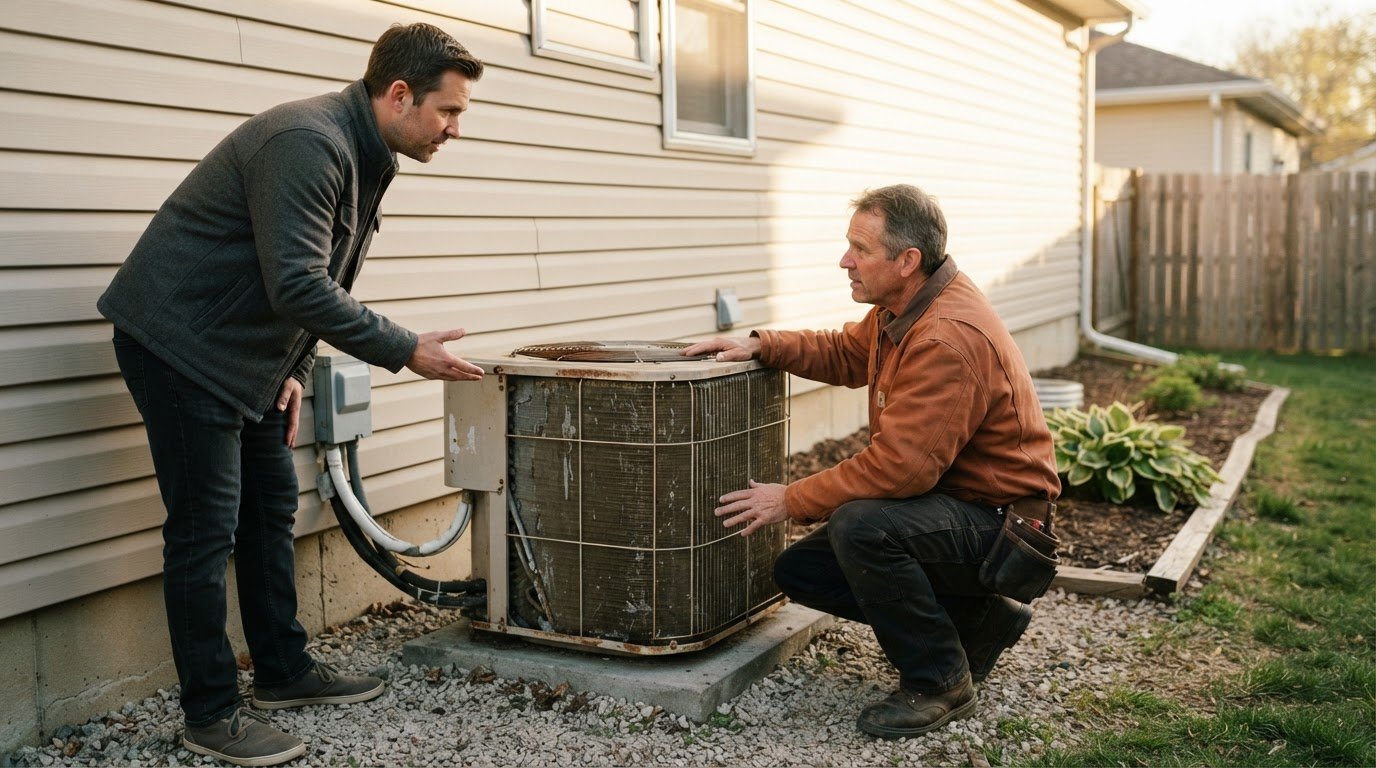
For HVAC contractors, buying leads means paying for inquiries from prospective customers interested in heating or cooling work. A lead’s fit depends on the requested service, location, and whether it is an exclusive web lead or a live inbound call transfer.
A busy phone is useful only when inquiries match your services and coverage. Koalaty Leads provides exclusive web leads and live inbound call transfers, so each opportunity goes to one contractor. Consider whether the lead’s service request and location fit the work your team handles.
This guide explains what to consider when you buy HVAC leads, from lead qualification and delivery format to service targeting and location. It also covers how Koalaty Leads’ exclusive web leads and live inbound call transfers fit different sales processes, and how to track results against booked jobs.
Key Takeaways
- Match lead qualification details to the HVAC work your team wants, then assess how leads are delivered and followed up.
- Understand how exclusivity changes competition for a prospect, and what to consider before accepting a live-transfer call.
- Separate residential opportunities from commercial prospects so your lead strategy fits your team’s capacity and sales process.
- Use service-area and customer-type filters to focus on inquiries your business can realistically serve.
- Compare lead costs by type and location, then track how spending translates into booked and acquired jobs.
How to Buy HVAC Leads That Fit Your Business
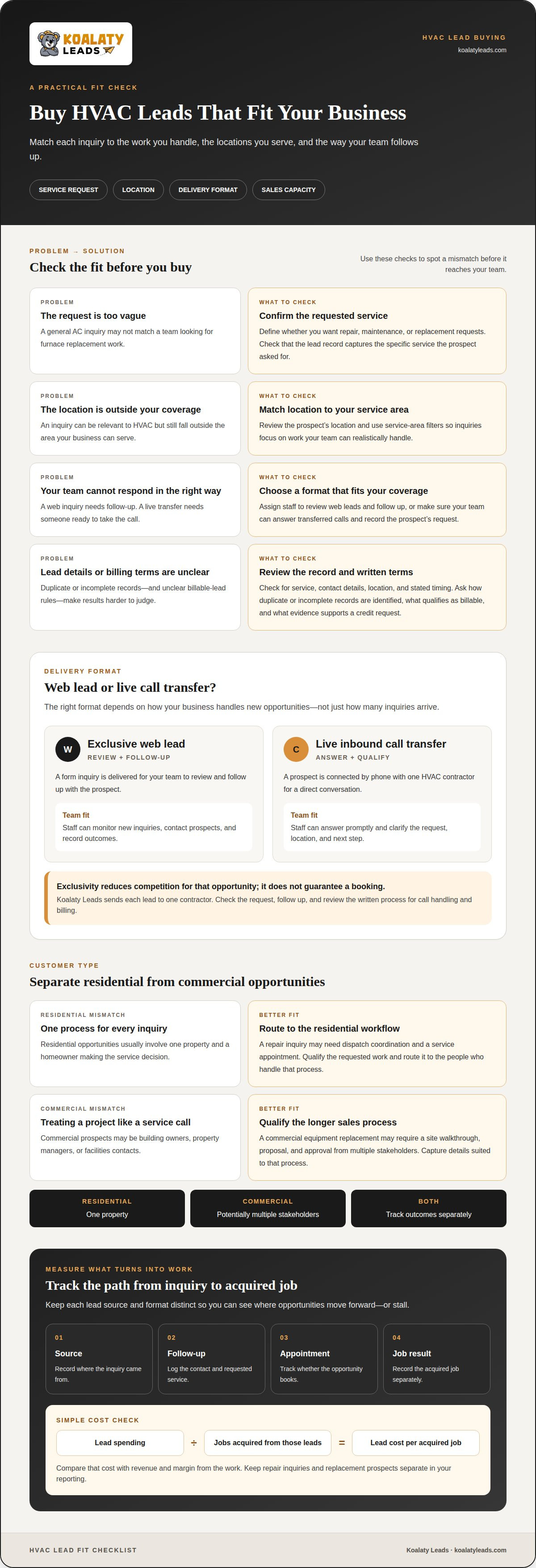
Choose an HVAC lead source by matching its inquiries to your actual work. Before buying, define whether you want repair, maintenance, or replacement requests, then compare each provider’s qualification process, delivery format, and billing terms. An HVAC marketing agency may manage campaigns, while a lead provider may deliver individual inquiries or inbound calls.
Start with the lead record. Check whether it captures the requested service, contact details, location, and the prospect’s stated timing. For example, a request for a furnace replacement differs from a general question about air conditioning. Ask how the provider identifies duplicate or incomplete records, and what evidence supports a credit request.
Delivery format affects how your team handles new opportunities. Koalaty Leads provides exclusive web leads and live inbound call transfers. Assign someone to review web leads or answer transferred calls, follow up with prospects, and record outcomes. A CRM can track the source, requested service, follow-up, appointment status, and job result.
Which HVAC lead-generation services have the best reviews and conversion rates? No provider’s reviews alone establish how its leads will perform for your company. Compare customer feedback with your own lead-to-appointment and appointment-to-job records, keeping each source separate.
HVAC lead sources can include paid search, social campaigns, and contractor marketing agencies. Each has a different handoff: a form inquiry may need staff follow-up, while an inbound call reaches your team by phone. Match the source to your call coverage and the services you want to sell.
What laws and rules apply to buying and contacting HVAC leads in the United States? Requirements depend on the lead’s consent record, source, and contact method. Review the documented consent language and applicable federal and state requirements before outreach.
What are the refund and cancellation policies for purchased HVAC leads? Review the seller’s written terms before buying, including how invalid leads are defined and what records support a credit request. Koalaty Leads uses a pay-per-lead model.
How can HVAC contractors calculate the ROI of purchased leads? Divide lead spending by the jobs acquired from those leads, then compare the cost with the revenue and margin from the work. Track each campaign separately so repair inquiries and replacement prospects don’t blur the results.
Risks include duplicate records, mismatched service requests, and unclear billing terms. Reduce them by reviewing sample lead fields, delivery rules, and credit conditions before committing. Avoid paying until the provider explains what qualifies as a billable lead and how disputes are handled.
Exclusive Pay-Per-Call HVAC Leads
A live inbound call transfer connects a prospect with one HVAC contractor by phone. It gives your team a direct conversation with someone seeking service, while the prospect’s request and location still determine whether the opportunity fits your operation.
Koalaty Leads sells exclusive leads, not shared leads. Each lead goes to only one contractor, so another buyer won’t receive that same opportunity through Koalaty Leads. Exclusivity doesn’t guarantee a booking, so assess the request, contact the prospect, and follow up promptly.
For a live transfer, clarify how the call is handled from connection to billing. A transfer may be useful for a team ready to speak with prospects by phone, but its value depends on what counts as a completed, qualified call. Review how the process treats a disconnected call, a wrong-number inquiry, or a request outside your services.
What should contractors compare when choosing an HVAC lead provider? Compare the exclusivity definition, call qualification, transfer process, billing trigger, and written dispute terms. Then assess the outcomes your team cares about, such as qualified conversations and booked appointments.
Exclusive homeowner leads can differ in intent. Someone calling about AC repair may want prompt service, while a homeowner considering replacement may expect an estimate and a longer sales conversation. Record the requested work, urgency, and next step separately.
Before buying, map the call path: who answers, how the request is recorded, and who handles follow-up if the call doesn’t lead to an appointment. A dispatcher might capture the service need and route a replacement inquiry to a comfort advisor. Clear ownership helps prevent promising prospects from getting lost.
Keep reporting specific to the lead format. Track connected calls, qualified opportunities, appointments, and completed jobs separately from web-form inquiries. This helps you see whether live conversations suit your staffing and sales process, rather than judging performance by call volume alone.
Residential and Commercial HVAC Contractor Leads
Residential leads usually involve one property and a homeowner making the service decision. Commercial leads may involve a building owner, property manager, or facilities contact. That difference affects who your team speaks with, what information it needs, and how it advances the opportunity.
A residential repair inquiry may call for dispatch coordination and a service appointment. A commercial request for equipment replacement may require a site walkthrough, proposal, and approval from multiple stakeholders. Qualify each opportunity with information suited to its sales process.
For smaller contractors, focus on lead types that match available crews and sales capacity. A business with technicians focused on residential service might prioritize homeowner repair requests instead of pursuing a facility project that requires estimating and additional coordination. Clear scope protects the schedule from work the company isn’t equipped to pursue.
Contractors with dedicated sales and service roles can route leads differently. A service coordinator might handle residential maintenance inquiries, while a commercial estimator reviews requests involving multiple units or buildings. Defined ownership helps each prospect reach someone prepared to discuss the work.
Lead qualification should reflect your operating model. For residential opportunities, capture the property type, requested service, and decision-maker. For commercial prospects, record the facility contact’s role, number of sites involved, project scope, and approval path. These details help sales staff judge whether a request matches the business.
Lead generation can support different revenue plans. Residential repair may feed a service schedule, while commercial work can create a proposal pipeline with longer approval steps. Track outcomes by customer type and job category so repeat service calls don’t conceal how commercial opportunities progress.
Small HVAC contractors can compete through specialization rather than accepting every inquiry. A company focused on residential replacement estimates can center its intake on that work. A contractor built around commercial maintenance can prioritize facilities seeking ongoing service over one-time residential repairs.
Review fit at each stage: inquiry, qualified opportunity, estimate or appointment, and closed work. If commercial prospects stall before proposals, improve the information collected for scope review. If residential jobs don’t fit technician schedules, adjust which requests your team prioritizes. Keep lead volume aligned with capacity and business goals.
Targeting HVAC Leads by Location and Business Needs
Strong HVAC targeting starts with the service area your crews can cover. Define eligible locations, then exclude places that create excessive travel time. Koalaty Leads offers leads in every U.S. city and all zip codes in the United States. If a contractor cannot service a zip code, the lead must be re-assigned at no cost to the contractor.
Location affects lead fit as much as customer intent. A heating repair request within your coverage area may suit your schedule, while a replacement inquiry farther away may require different dispatch planning. Set boundaries based on technician availability, travel time, and the work your business accepts.
Consumer attributes can clarify the likely service need. Capture whether the prospect is a homeowner, the property location, and whether they want repair, maintenance, or replacement. A system more than 12 years old in an existing customer database may indicate a potential replacement conversation.
For commercial targeting, collect business type, property location, and the contact’s role. An office manager asking about one building has a different buying process from a facilities contact responsible for several sites. Routing inquiries by project scope helps the right person respond.
Seasonal timing can shape campaigns without broadening the strategy. A pre-summer tune-up offer on paid social can reach people considering cooling maintenance. Google search campaigns, by contrast, can focus on active intent, such as a prospect seeking heating repair or an HVAC replacement estimate.
Match each campaign’s geography and message to your available capacity. If technicians are booked for repair work, prioritize the service requests your team can schedule. If replacement estimates are the focus, use lead fields that identify project interest and location before assigning the inquiry.
Review lead results by location and customer type, not as one blended total. Compare which areas produce qualified appointments, then refine targeting where inquiries fall outside your service area. Separate residential repairs from commercial projects to see which audience fits your team’s goals.
Before activating a new campaign, define the exact customer and service you want. Specify location, residential or commercial property, requested work, and seasonal intent. Clear filters help reduce mismatched inquiries and make it easier to assess HVAC lead options against your operating needs.
How Much Do HVAC Leads Cost by Type and Location?
HVAC lead pricing depends on the work requested, exclusivity, delivery method, and market. A repair inquiry, replacement prospect, and commercial project aren’t interchangeable. Compare the quoted lead cost with the appointments and acquired jobs each type produces.
Lead type changes what the price covers. Shared inquiries may be distributed to several contractors, while exclusive leads are assigned to one. Live calls connect a prospect by phone, so the charge may depend on a qualifying call or transfer. Read the seller’s billing definition before comparing offers.
| Lead type | What affects cost | What to measure |
|---|---|---|
| Shared service-call lead | Repair intent, service requested, and how many contractors receive it | Contact rate, appointments, and closed repair jobs |
| Exclusive replacement lead | Replacement intent, location, and lead qualification | Estimates booked and acquired replacement jobs |
| Live inbound call | Call qualification, transfer rules, and service-area match | Connected calls, qualified conversations, and scheduled visits |
| Commercial inquiry | Project scope, site requirements, and decision process | Qualified opportunities, proposals, and won projects |
Location can shape lead availability and cost. Ask providers which locations they serve and how pricing is set for your market. Confirm that any lead you buy matches the area your team can service.
Season and demand can affect availability and pricing. A heating repair campaign during colder weather may draw a different mix of urgent requests than a planned replacement campaign. Keep the same service, location, and delivery method in each comparison to avoid blending unlike leads.
To calculate cost per acquired job, divide lead spending by jobs won from those leads. For example, separate residential repair results from commercial proposals in your CRM. Include follow-up and sales effort when assessing payback, since a low-cost inquiry can still take time without producing a booked job.
Compare written terms alongside price: billable-event definitions, lead delivery, exclusivity, and credits for invalid records. Then review qualified contacts, appointments, and closed jobs by source and location. That process shows which lead type fits your service area and sales capacity.
Koalaty Leads: HVAC Leads
Koalaty Leads provides exclusive HVAC leads and live call options for contractors seeking a more direct path to prospective customers. Its HVAC lead offering fits businesses that want to focus on heating, cooling, repair, or replacement opportunities rather than compete over shared inquiries.
The right next step depends on your sales operation. If your team can answer inbound calls and qualify prospects by phone, live transfers can support direct conversations. If your sales process starts with reviewing a lead record, pay-per-lead delivery may fit better. Both models require a clear handoff to the person responsible for follow-up.
Before discussing a campaign, define the work you want and the markets your business serves. You might focus on residential replacement inquiries, service calls, or commercial HVAC prospects. Your service area, crew capacity, and preferred customer type help shape a relevant conversation about lead fit.
Exclusivity matters because it determines whether another contractor receives the same opportunity. Koalaty Leads sells exclusive leads, not shared leads. That distinction can reduce competition for an inquiry, while your team remains responsible for contacting the prospect, assessing the request, and moving toward an appointment.
For live inbound call transfers, consider how your staff handles conversations. Identify who answers, how the call is routed, and what details your team needs to qualify the request. A contractor focused on replacement estimates may use a different intake process from a company prioritizing repair calls.
Keep performance measurement tied to your sales process. Log lead source, requested work, location, contact outcome, appointment, and closed job. Reviewing those stages helps you see whether the lead type fits your operation and where follow-up or scheduling needs attention.
Koalaty Leads also provides leads for Roofing, Windows, Bathroom Remodeling, and other home improvement categories. For an HVAC contractor, the relevant discussion remains focused on HVAC prospects, the desired lead format, and the market your team can serve.
Contact Koalaty Leads to discuss exclusive HVAC leads or live transfers for your trade and market.
Turn Your Lead Plan Into the Next Step
When you buy HVAC leads, think beyond filling the schedule. Build a lead plan around the work your team wants to grow, then keep the process clear from the first conversation through the booked appointment. Consistent tracking gives you a sound basis for deciding what to expand and refine.
Koalaty Leads also provides leads for Roofing, Windows, and Bathroom Remodeling. For contractors working across those trades, related opportunities can support a broader growth plan without losing focus on HVAC performance.
Start with a practical conversation about the HVAC work you want, your market, and whether exclusive web leads or live inbound call transfers better fit your sales process. Koalaty Leads can discuss those options with you directly.
Make the next step deliberate. A focused lead plan gives your team a clear path to pursue the right opportunities.
Frequently Asked Questions
Can I target specific HVAC services (AC only, heating only)?
Yes, custom filters can focus service targeting on AC, heating, or both. Define the work clearly, such as cooling repair and replacement, rather than general HVAC service. Keep those categories consistent in campaign setup and call intake so dispatchers route inquiries to the right team. Review results by service category to see whether targeting aligns with booked work.
Do you filter out repair-only leads if I only want installations?
Koalaty Leads offers custom filters, so an installation-focused campaign can prioritize replacement intent and exclude repair-only inquiries. Define what qualifies as an installation prospect, such as a full system replacement, rather than treating every HVAC inquiry as a fit. Keep those criteria consistent in lead review and sales reporting to assess whether opportunities match your installation pipeline.
How does seasonality affect HVAC lead volume?
Seasonality can change which HVAC services prospects request. Cold weather can bring heating-related inquiries, while hot periods may increase interest in cooling repair or replacement. The mix and volume depend on conditions and campaign targeting. Plan staffing around the services your team can handle, and review incoming inquiries by service type. That helps you adjust scheduling when demand shifts between heating and air conditioning.
How to grow a HVAC business?
Grow by connecting lead spending to completed, profitable work. When you buy HVAC leads, track how each source contributes to booked jobs, then align campaign focus with crew capacity and the services you want to expand. Review outcomes regularly with sales and dispatch. Use those findings to refine intake and follow-up, rather than adding opportunities your team cannot serve well.
Where can HVAC contractors buy leads in the United States?
U.S. contractors can buy HVAC leads from Koalaty Leads, which provides exclusive web leads and live inbound call transfers. Leads are available in every U.S. city and all zip codes in the United States. If a contractor cannot service a zip code, the lead must be re-assigned at no cost to the contractor. Choose the delivery type that fits your team’s call handling and intake process.
What types of HVAC leads can contractors buy, such as exclusive, shared, or pay-per-call?
Contractors may encounter exclusive web leads, shared lead products, and pay-per-call opportunities. Koalaty Leads provides exclusive web leads and live inbound call transfers through a pay-per-lead model; it does not sell shared leads. With a web lead, your team receives an inquiry to manage. A live inbound call transfer connects the prospect by phone, so your call intake process is central to handling it.
How do HVAC lead providers verify and qualify leads?
Koalaty Leads qualifies leads through a 13-point stack before delivery. Qualification screens an inquiry, but it doesn’t establish whether the prospect will schedule or purchase. After delivery, record whether the contact details work, the requested HVAC service fits your scope, and an appointment is booked. Separate invalid or mismatched inquiries from valid prospects who don’t proceed. That distinction makes source reporting more useful.
Are HVAC leads sold exclusively or shared with competing contractors?
Koalaty Leads delivers each lead to only one contractor rather than selling shared leads. That means your team isn’t competing with other buyers for the same inquiry through this lead source. Exclusivity doesn’t determine whether a prospect books; service fit, contact, and follow-up still shape the outcome. Track those stages to understand how exclusive opportunities perform in your sales process.
Need exclusive leads instead of shared ones? Koalaty Leads delivers qualified homeowners — web leads or live call transfers — to one contractor only.
Get Started