
Bathroom Remodel Leads: A Buying Guide for Remodelers

A cheap lead is often the most expensive mistake your contracting business can make. Chasing low-cost form fills usually means burning valuable sales payroll on disconnected numbers, tire-kickers who only want minor cosmetic repairs, or prospects already fielding calls from four other contractors. Buying bathroom remodel leads should build a predictable, high-margin installation calendar, not an exhausting game of phone tag.
You already know the frustration of paying aggregator platforms only to watch your sales team battle race-to-the-bottom pricing. When lead flow is erratic, keeping your installation crews booked two to six weeks in advance becomes a constant struggle that puts cash flow at risk.
This guide covers the unit economics, conversion benchmarks, and sourcing strategies you need to buy bathroom remodel leads that reliably produce profitable jobs. We'll break down how to analyze true acquisition costs, filter out tire-kickers, and keep your marketing expense under 10% of project revenue.
Key Takeaways
- Measure marketing investments by cost per acquired job rather than upfront lead price to protect net project margins.
- Discover why exclusive bathroom remodel leads and live transfers eliminate bidding wars and lower your cost of acquisition compared to shared directories.
- Align your lead channels with your project specialty, whether you execute high-ticket full gut remodels, one-day wet-area conversions, or walk-in tub installations.
- Learn the critical auditing criteria to confirm lead origin, filter out low-intent inquiries, and protect your ad spend.
- Implement rapid intake and live routing processes that secure estimates quickly and keep installation crews consistently booked weeks out.
The Economics of Buying Bathroom Remodel Leads
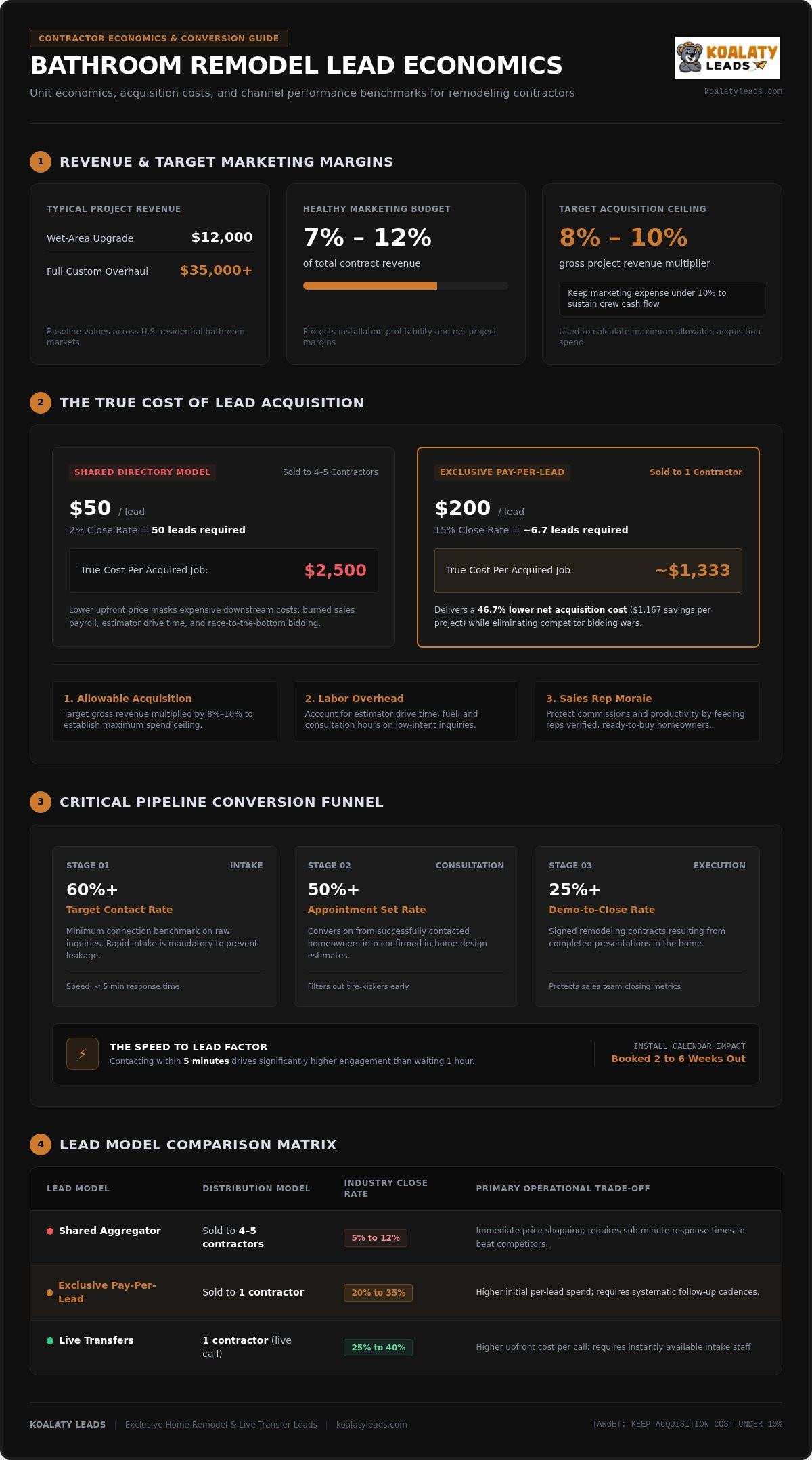
Every commercial remodeling business survives on unit economics, not vanity metrics. When buying bathroom remodel leads, evaluating initial lead price without considering total contract value is a fast path to wasted capital. Across the United States, residential bathroom projects typically range from $12,000 for wet-area upgrades to well over $35,000 for full custom overhauls. A healthy, sustainable marketing budget sits between 7% and 12% of total contract revenue, meaning your cost per acquired job must stay strictly aligned with your realized margins.
Modern contractor marketing relies on structured lead generation channels that balance volume against real conversion speed. To see how top-performing remodeling companies scale their intake pipeline efficiently, review this operational breakdown:
Calculating Cost Per Acquired Job
A cheap lead often hides massive downstream costs. Consider a $50 shared directory inquiry that converts at just 2%; you need 50 leads to win one contract, pushing your true acquisition cost to $2,500. Conversely, an exclusive inquiry priced at $200 with a 15% close rate yields an acquisition cost of roughly $1,333 per signed project.
Your true acquisition math must incorporate these critical variables:
- Allowable Acquisition Cost: Calculate your target profit margin and multiply gross project revenue by 8% to 10% to establish your acquisition ceiling.
- Labor Overhead: Factor in estimator drive time, fuel, and initial consultation hours spent on unqualified prospects.
- Sales Commissions: Protect sales rep morale by feeding them qualified homeowners rather than chasing low-intent inquiries.
The Pipeline Conversion Metrics That Matter
Pipeline health depends on tracking three operational ratios: contact rate, appointment set rate, and demo-close rate. Target industry benchmarks require maintaining a 60%+ contact rate on raw inquiries, converting at least 50% of contacted prospects into in-home design appointments, and closing 25% or more of completed presentations.
Speed to lead dictates these ratios. Contacting a homeowner within five minutes yields significantly higher engagement than waiting an hour. When reps delay follow-up, connection rates plummet, creating costly pipeline leakage before your estimators ever set foot in the home.
Lead Generation Models: Shared Aggregators vs Exclusive Pay-Per-Lead vs Live Transfers
Contractors generally choose between three distribution channels when purchasing bathroom remodel leads: shared directory marketplaces, exclusive pay-per-lead programs, and live phone transfers. Modern online lead generation structures lead intent differently across each channel, directly dictating appointment setting rates, close rates, and overall job profitability.
| Lead Model | Distribution | Industry Close Rate | Primary Operational Trade-Off |
|---|---|---|---|
| Shared Aggregator | Sold to 4-5 contractors | 5% to 12% | Immediate price shopping; requires sub-minute response times |
| Exclusive Pay-Per-Lead | Sold to 1 contractor | 20% to 35% | Higher per-lead spend; requires systematic follow-up cadences |
| Live Transfers | 1 contractor (live call) | 25% to 40% | Higher upfront cost per call; requires available intake staff |
Shared Directory Marketplaces and Race-to-the-Bottom Bidding
Aggregators like Angi, Thumbtack, and HomeAdvisor monetize consumer inquiries by selling the same homeowner contact information to four or five competing companies simultaneously. This structure triggers an immediate race to the bottom on pricing. Homeowners often feel overwhelmed by getting flooded with calls within sixty seconds, making it difficult for your estimators to establish rapport or protect healthy gross margins.
Exclusive Pay-Per-Lead and Direct Inbound Routing
Exclusive channels route homeowner inquiries directly to your intake system without third-party distribution. Sourcing exclusive bathroom remodel leads removes head-to-head bidding, allowing estimators to focus on product specifications, quality installation, and lifetime warranties. If you want to stabilize your monthly sales volume without competing against discounters, speak with our team about territory availability.
Live Transfers and Pay-Per-Call Advantages
Live transfers eliminate outbound friction by routing pre-screened homeowners directly to your phone. Instead of having sales reps waste hours leaving voicemails for cold form submissions, live transfers deliver active conversations with homeowners who are ready to schedule an on-site design consultation. This immediate connection shortens sales cycles, improves appointment hold rates, and keeps your calendar filled with serious buyers.
Segmenting Bathroom Project Leads: Wet-Area, Full Gut, and Walk-In Tubs
Lead sourcing requirements vary dramatically across remodeling business models. Sourcing bathroom remodel leads without segmenting project types creates operational friction between your marketing spend and your field crews. A contractor geared for high-volume wet-space conversions wastes payroll trying to manage twelve-week architectural design jobs. Aligning your intake channels with your exact production capabilities protects estimator time and improves closing consistency across every tier of work.
Tub-to-Shower and Wet-Area Conversions
Wet-area conversions and acrylic replacements thrive on transaction speed and standardized installation packages. Homeowners seeking these upgrades usually experience immediate functional pain, such as cracked fiberglass, persistent mildew, or difficult tub walls. They respond best to a one-call-close sales model backed by competitive monthly financing options. Successful campaigns for wet-area work target replacement intent rather than minor repair requests, keeping your sales reps focused on jobs that install in two days or less.
Full-Gut and Master Bathroom Renovations
Complete master bathroom remodels demand a design-build sales approach with longer consideration cycles. Prospects looking to move plumbing stacks, reconfigure layouts, or install custom dual vanities require comprehensive in-home consultations before signing a contract. Estimators must qualify overall project scope and budget expectations before committing travel time to an on-site visit. For general remodelers, pairing high-ticket master suites with kitchen remodel leads builds substantial backlog, creating whole-home renovation contracts that maximize revenue per client.
Aging-in-Place and Walk-In Tub Installations
Accessibility remodeling operates on genuine physical necessity and tight timelines. Sourcing walk-in tub leads requires qualifying home specifications early, including doorway widths, water heater gallon capacity, and electrical panel clearance for hydrotherapy pumps. These consultations often involve adult children collaborating on decisions with senior homeowners, requiring clear safety communication. Because these therapeutic installations require specialized plumbing and electrical expertise, they command higher average margins that deliver strong returns on your acquisition investment.
How to Vet a Lead Provider and Protect Your Marketing Capital
Auditing third-party vendors with a strict qualification checklist prevents wasted marketing funds and operational friction. When purchasing bathroom remodel leads, you must verify how prospect data is gathered, validated, and transferred before signing an insertion order. Cutting corners on vendor due diligence leads to disputed credit card charges, frustrated sales reps chasing disconnected numbers, and potential exposure to regulatory fines.
Auditing Lead Origin and Exclusivity Clauses
Every reputable vendor should plainly explain how they generate their consumer inquiries. Demand clarity on whether prospects originate from paid search intent, organic search assets, social media forms, or co-registration sweeps. Sweepstakes traffic and incentivized gift card promotions produce disengaged homeowners who rarely convert into paying remodeling clients.
Protect your capital and operations by verifying three non-negotiable standards:
- Consent Verification: Require independent compliance certificates like Jornaya LeadID or TrustedForm tokens to document genuine consumer intent and ensure strict TCPA compliance.
- Exclusivity Language: Confirm contractually that consumer data routes only to your intake queue and is never entered into shared ping-post exchanges.
- Lead Targeting: Ensure campaigns target full replacement or conversion projects rather than small-ticket handiwork or minor fixture repairs.
Understanding Credit Terms, Contracts, and Spend Minimums
Carefully review credit dispute procedures before committing capital. Legitimate lead generation partners maintain straightforward, written policies for crediting non-viable leads, such as disconnected phone numbers, renters who lack authority to hire contractors, and inquiries located outside your agreed service zip codes. Avoid providers that enforce restrictive dispute windows or demand excessive documentation to process routine credits for bad contact information.
Contract terms often signal a company's underlying lead quality. High-performing vendors let their performance sustain the business relationship rather than locking remodelers into binding six-month agreements with restrictive termination clauses. Begin any new vendor relationship with an agreed trial volume to benchmark contact rates and appointment set ratios before increasing monthly allocation.
Scaling Your Pipeline with High-Intent Remodeling Opportunities
Generating steady, qualified opportunities requires matching external lead flow with disciplined internal sales systems. Even premium bathroom remodel leads lose value when an intake team takes hours to respond or lacks a structured qualification framework. Remodeling businesses scale sustainably when they build rapid response processes that turn raw interest into confirmed calendar appointments within minutes.
Structuring Your Sales Team for Rapid Response
Speed to contact determines appointment success. Equipping your intake coordinators with real-time mobile notifications and CRM webhooks ensures new inquiries receive a call while interest remains high. Train your reps to secure an on-site design consultation during the initial conversation rather than simply emailing ballpark price sheets.
Maintain consistent operational discipline across these core intake areas:
- Direct Call Routing: Direct inbound phone inquiries and live transfers to senior estimators or dedicated intake reps, avoiding general administrative voicemail boxes.
- First-Call Value Framing: Focus the initial conversation on measuring timelines, scope preferences, and design vision before discussing bottom-line project figures.
- Pipeline Tracking: Audit pipeline progression weekly inside your CRM to trace contact rates, confirmed design appointments, signed contracts, and gross project margins.
Building Long-Term Capacity with Koalaty Leads
Predictable field scheduling depends on a reliable, non-competitive lead source. Partnering with a specialized provider allows you to set specific geographic boundaries and target homeowner scopes that match your production crews, whether you specialize in high-margin master suites or standard acrylic wet conversions. Exclusive distribution keeps your team focused on delivering high-end craftsmanship instead of racing discounters to the bottom.
Contractors ready to stabilize their production calendar and eliminate shared directory bidding can connect directly with Koalaty Leads. We help home service professionals across the country secure high-intent inquiries and live calls, giving your business the operational predictability it needs to scale profitably.
Take Control of Your Remodeling Pipeline
Scaling a contracting business requires moving away from the race to the bottom. Investing in high-intent bathroom remodel leads ensures your team spends time meeting genuine buyers rather than chasing cold directory entries. With 100% exclusive distribution, your estimators never bid against other contractors on the same inquiry. Direct inbound calls and real-time live transfers connect your intake team immediately with active prospects seeking full renovations, wet-area conversions, and walk-in tubs nationwide.
Stop letting inconsistent inquiry volume dictate your installation schedule. Take command of your sales pipeline, protect your project margins, and keep your installation crews booked out weeks in advance.
Frequently Asked Questions
How much should a remodeling contractor expect to pay for bathroom remodel leads?
Lead pricing varies based on distribution exclusivity, local market demand, and project scope. Rather than fixating on raw lead cost, contractors should evaluate lead investments by keeping total customer acquisition costs between 7% and 12% of gross contract revenue. High-intent, exclusive inquiries require a larger upfront marketing commitment than shared directory forms, but they produce lower overall acquisition costs through significantly higher closing rates.
What is the difference between exclusive bathroom remodeling leads and shared leads?
Shared leads are distributed simultaneously to multiple competing contractors, triggering aggressive price wars and frustrating homeowners with dozens of automated calls. Exclusive bathroom remodel leads route directly and solely to your business. This exclusivity protects your profit margins, eliminates direct bidding against low-cost discounters, and allows your sales team to establish value during the initial consultation without feeling rushed.
How fast does an estimator need to contact an exclusive bathroom remodel lead?
Your intake team should contact digital inquiries within five minutes of submission. While exclusive leads do not face the immediate contractor bidding wars typical of aggregator platforms, consumer interest drops sharply after the first thirty minutes. Calling right away while the homeowner is still focused on their project dramatically increases contact rates, secures earlier appointment dates, and prevents them from searching elsewhere.
What conversion rate should a remodeler expect from exclusive inbound calls?
Exclusive inbound calls and live phone transfers convert significantly higher than standard web forms. Contractors who use a dedicated intake script typically schedule design appointments on 60% to 75% of qualified inbound calls. From completed in-home consultations, established remodeling companies close between 25% and 35% of those prospective clients, depending on available financing packages and sales presentation structure.
Are walk-in tub and safety shower leads priced differently than standard remodels?
Safety accessibility inquiries often carry different acquisition metrics than general cosmetic renovations. Walk-in tubs and barrier-free showers serve a distinct demographic driven by physical necessity, requiring specialized installation expertise for electrical and plumbing lines. Because these accessibility projects deliver higher gross margins and faster closing cycles, contractors often allocate higher marketing budgets per job to secure these high-value contracts.
Can a bathroom contractor return or get credit for bad leads?
Reputable lead generation partners provide clear, written credit policies for provably non-viable contacts. Legitimate criteria for replacement credits include disconnected phone lines, wrong numbers, verified renters who cannot legally authorize home modifications, and addresses outside your designated service territory. Always review a provider's dispute submission window and review terms before funding your initial campaign.
Why is TCPA compliance and TrustedForm verification important when buying leads?
Strict TCPA compliance protects your business from devastating statutory penalties and telemarketing lawsuits. Independent verification tokens like TrustedForm and Jornaya LeadID document exact consumer consent, timestamping when the homeowner requested remodeling contact. Sourcing verified bathroom remodel leads ensures your sales team contacts willing prospects safely while shielding your marketing capital from legal liability.
Need exclusive leads instead of shared ones? Koalaty Leads delivers qualified homeowners — web leads or live call transfers — to one contractor only.
Get Started